


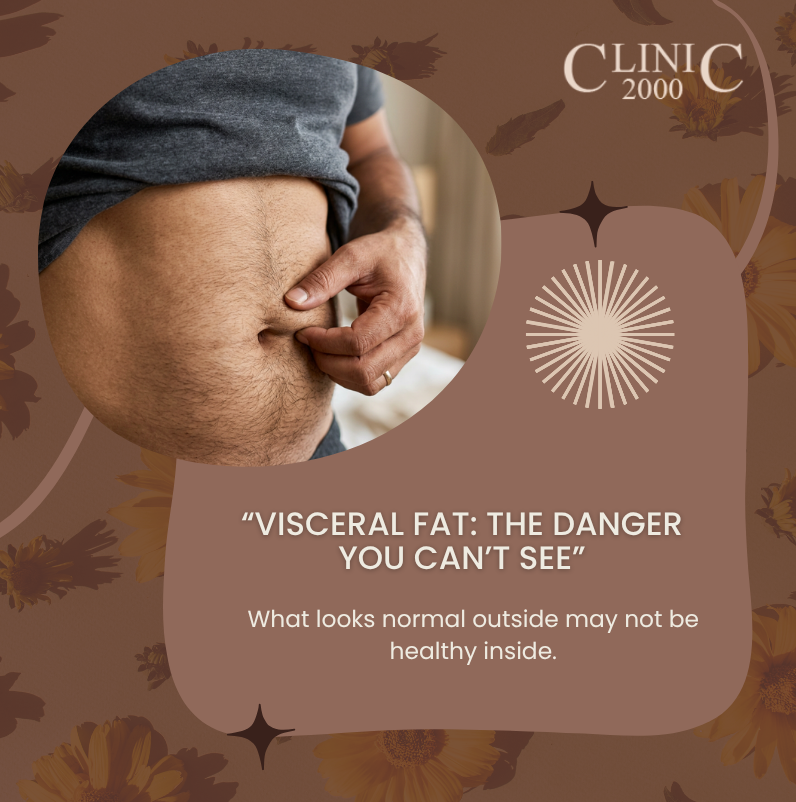
Most people who worry about body fat focus on what they can see: the fat they can pinch, the fat that shows on their arms or thighs, the shape of their belly. But the most dangerous fat in your body is the kind you cannot see or feel, the fat that lives deep inside your abdomen, wrapped around your liver, pancreas, intestines, and other vital organs.
This is visceral fat. And unlike the subcutaneous fat that sits just beneath the skin, visceral fat is not passive storage, it is metabolically active tissue that releases hormones and inflammatory chemicals directly into the bloodstream. In high quantities, it is one of the most significant independent risk factors for type 2 diabetes, cardiovascular disease, non-alcoholic fatty liver disease, certain cancers, and premature death.
The frightening thing about visceral fat is that you can have dangerous levels of it at a perfectly normal body weight. In this blog, we explain what visceral fat is, why it is so harmful, how to identify how much you have, and what actually reduces it effectively.
Visceral Fat vs. Subcutaneous Fat: What’s the Difference?
Subcutaneous Fat
This is the fat just beneath your skin, the kind you can pinch at your waist, hips, or thighs. It acts as energy storage and insulation. While excess subcutaneous fat contributes to obesity and its related risks, it is metabolically less active and less immediately dangerous than visceral fat. It is also more visible, you can see it and measure it.
Visceral Fat
Visceral fat sits in the abdominal cavity, surrounding the internal organs. It is not visible from the outside and cannot be felt by touch. Because it lies so close to the portal vein, the blood vessel that carries blood from the intestines to the liver visceral fat releases fatty acids, hormones, and inflammatory chemicals directly into the liver and the systemic circulation.
This proximity to the portal system is precisely what makes visceral fat so metabolically dangerous. It is essentially an active endocrine organ producing substances that disrupt insulin signalling, promote systemic inflammation, and damage blood vessels.
Why Visceral Fat Is So Dangerous
Insulin Resistance and Type 2 Diabetes
Visceral fat is one of the primary drivers of insulin resistance. The free fatty acids and inflammatory cytokines it releases interfere with insulin’s ability to regulate blood sugar. Over time, this leads to elevated blood glucose levels, pre-diabetes, and eventually type 2 diabetes.
Cardiovascular Disease
Visceral fat promotes the deposition of fatty plaques in artery walls (atherosclerosis), raises LDL cholesterol, lowers HDL cholesterol, elevates triglycerides, and increases blood pressure. This combination significantly raises the risk of heart attack and stroke independently of overall body weight.
Non-Alcoholic Fatty Liver Disease (NAFLD)
Excess fatty acids released by visceral fat accumulate in the liver, causing NAFLD, a condition now affecting a significant proportion of the Indian population. NAFLD can progress to non-alcoholic steatohepatitis (NASH), cirrhosis, and liver failure.
Hormonal Disruption
Visceral fat produces excess oestrogen in both men and women, disrupts cortisol regulation, and contributes to elevated androgen levels in women (a factor in PCOS). These hormonal effects create further cycles of fat accumulation and metabolic dysfunction.
Inflammation
Visceral fat is a major source of pro-inflammatory molecules, particularly TNF-alpha and interleukin-6. Chronic low-grade inflammation from visceral fat accumulation is now understood to be a shared mechanism underlying cardiovascular disease, diabetes, certain cancers, and neurodegenerative conditions.
How Do You Know How Much Visceral Fat You Have?
This is where most people and unfortunately, most standard health check-ups, fall short. Waist circumference is a reasonable proxy: a waist measurement above 90 cm in men or 80 cm in women (Asian-specific thresholds) is associated with elevated visceral fat risk. However, waist circumference tells you nothing about the actual quantity or distribution of visceral fat.
A regular weighing scale cannot distinguish between muscle, subcutaneous fat, water, and visceral fat, it simply adds them all together. A person at a ‘normal’ BMI can have dangerously high visceral fat and remain undetected.
At Clinic 2000, we use clinical Body Composition Analysis to measure visceral fat levels directly, alongside overall fat percentage, lean mass, and metabolic rate. This gives a complete and actionable picture of your internal metabolic health, not just a number on the scale.
What Reduces Visceral Fat Effectively?
Dietary Changes
Visceral fat responds particularly well to dietary intervention. A diet low in refined carbohydrates, added sugars, and trans fats and high in fibre, lean protein, and healthy fats is the most evidence-based nutritional approach to visceral fat reduction. Our dietitian at Clinic 2000 creates personalised nutrition plans specifically targeting insulin sensitivity and metabolic fat reduction.
Exercise – Particularly Aerobic Exercise
Of all lifestyle interventions, aerobic exercise (brisk walking, running, cycling, swimming) has the strongest evidence for specifically reducing visceral fat, even independent of total weight loss. Adding strength training further improves metabolic rate and insulin sensitivity.
Medically Supervised Weight Loss
At Clinic 2000, our medical obesity programme combines a personalised nutrition plan, exercise guidance, and body composition monitoring to achieve genuine visceral fat reduction not just overall weight loss. For patients with significant visceral fat and metabolic risk factors, medically supervised treatment is the most effective and safe approach.
Managing Stress and Sleep
Cortisol, the stress hormone specifically drives visceral fat accumulation. Chronic stress, poor sleep, and sleep apnoea all raise cortisol and promote visceral fat deposition. Our programme includes guidance on sleep and stress management as integral components of metabolic health improvement.
Non-Surgical Procedures
For stubborn abdominal fat, non-surgical procedures such as HIFU Liposonix can be used alongside medical and nutritional management to assist in fat reduction. These are adjunctive, the primary driver of visceral fat reduction must be metabolic intervention, not procedures alone.
Conclusion
Visceral fat is the silent threat that standard health checks miss and standard diets alone rarely fix. If you have a family history of diabetes or cardiovascular disease, struggle with abdominal weight, or simply want to know the true state of your metabolic health, a comprehensive body composition assessment is an essential first step.
At Clinic 2000, we have been measuring and treating metabolic obesity, including visceral fat for nearly three decades. Our team has the expertise to assess your internal fat accurately and design a programme that meaningfully reduces your metabolic risk.
Book a consultation today. What you cannot see can still be treated.
Frequently Asked Questions
Q: Can I reduce visceral fat with exercise alone?
Yes, aerobic exercise is among the most effective interventions for visceral fat reduction specifically. However, combining exercise with dietary change and medically supervised weight management produces significantly faster and more comprehensive results.
Q: Can I have high visceral fat at a normal weight?
Yes. This phenomenon, sometimes called ‘TOFI’ (thin outside, fat inside) is particularly common among South Asian populations, who tend to accumulate visceral fat at lower BMI thresholds than Western populations.
Q: How quickly does visceral fat respond to lifestyle changes?
Visceral fat is actually more responsive to lifestyle change than subcutaneous fat. Studies show that visceral fat begins to reduce within weeks of meaningful dietary and exercise changes, even before total body weight changes significantly.
Q: Does stress cause belly fat?
Yes. Elevated cortisol from chronic stress specifically promotes visceral fat accumulation. Stress management is therefore a medically important component of any visceral fat reduction programme.
Q: Is the Body Composition Analysis at Clinic 2000 safe?
Yes. Our Body Composition Analysis is a non-invasive, painless assessment that takes minutes and provides detailed data on fat mass, lean mass, visceral fat levels, and metabolic rate.