


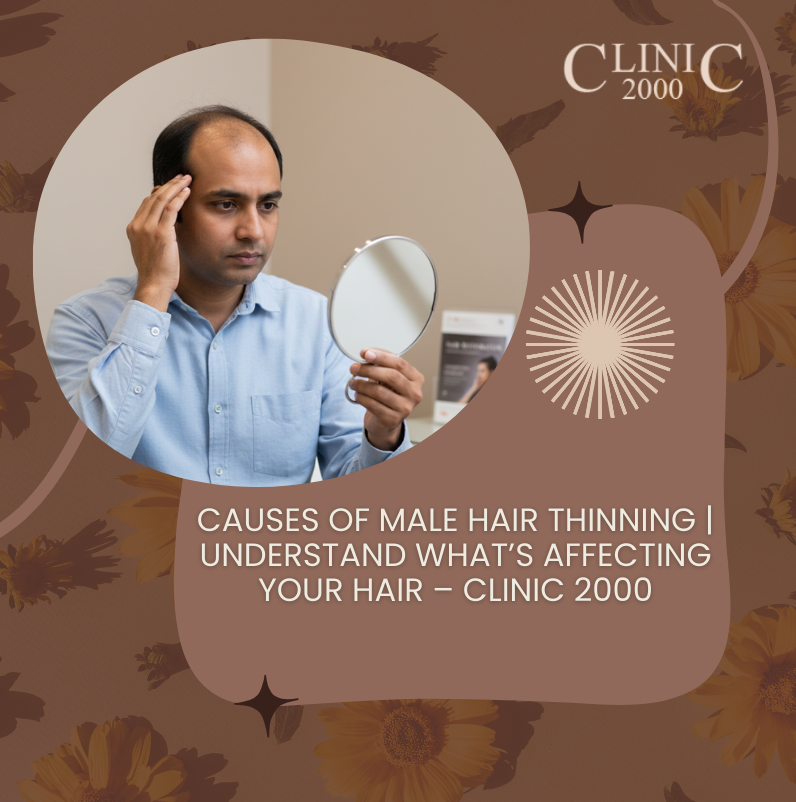
Causes of Male Hair Thinning
Understanding What’s Affecting Your Hair
Hair thinning is a common issue that affects both men and women, but it’s especially prevalent among men. According to the American Academy of Dermatology, two-thirds of men experience some degree of hair thinning by the age of 35. While some hair thinning is a natural part of the aging process, other factors like genetics, hormonal changes, and lifestyle can contribute to the condition.
At Clinic 2000, we believe in addressing the root causes of hair thinning in men and offering tailored treatments that can help restore hair and prevent further loss. In this blog, we’ll explore the common causes of male hair thinning, how they affect your hair, and the most effective treatments available to manage or reverse the condition.
What is Male Hair Thinning?
Hair thinning is the gradual reduction in the density of hair follicles, leading to visible areas of thinner hair, receding hairlines, or even bald spots. It is different from hair loss (which can happen suddenly), as it occurs slowly over time.
Male pattern baldness (MPB) or androgenetic alopecia is the most common form of hair thinning in men, but other factors can also contribute to thinning hair.
Common Causes of Male Hair Thinning
1. Genetics (Male Pattern Baldness)
The most common cause of hair thinning in men is genetics. Also known as male pattern baldness (MPB) or androgenetic alopecia, this condition is inherited and typically starts in the late teens or early twenties. It can be passed down from either parent, although it’s more commonly inherited from the mother’s side.
How genetics contribute to hair thinning:
• Hormones: Male pattern baldness is influenced by dihydrotestosterone (DHT), a by-product of the hormone testosterone. DHT attaches to hair follicles, causing them to shrink, leading to thinner hair and eventual bald spots.
• Pattern: MPB usually starts at the temples and crown of the head, forming a receding hairline or bald patches. Over time, the hair becomes finer and shorter.
2. Hormonal Changes
Hormonal fluctuations are a major cause of hair thinning in men. Testosterone levels influence hair growth and shedding, and when testosterone converts to dihydrotestosterone (DHT), it can cause hair follicles to shrink and produce finer, shorter hairs.
Hormonal changes can be caused by:
• Aging: As men age, their testosterone levels naturally decrease, leading to hair thinning or loss.
• Stress: Chronic stress increases cortisol levels, which can affect the hair growth cycle, leading to telogen effluvium, a condition where hair prematurely enters the shedding phase.
• Thyroid imbalance: An underactive thyroid (hypothyroidism) can cause hair thinning, while an overactive thyroid (hyperthyroidism) can result in hair breakage and thinning.
3. Nutritional Deficiencies
A lack of essential vitamins and minerals can have a significant impact on hair health. Deficiencies in key nutrients can slow hair growth, cause hair thinning, and even lead to hair loss.
Common nutritional deficiencies that contribute to hair thinning include:
• Iron deficiency: Low iron levels can lead to anemia, which is linked to hair thinning.
• Vitamin D deficiency: Low levels of vitamin D can disrupt the hair growth cycle.
• Zinc deficiency: Zinc plays a key role in hair growth and repair, and a lack of it can lead to hair thinning.
• B-vitamins: Deficiency in biotin (vitamin B7) or folic acid can lead to weaker, thinner hair.
4. Stress
Stress is another common cause of hair thinning in men. When you experience prolonged or intense stress, your body produces excess cortisol, the stress hormone. Elevated cortisol levels can disrupt the normal hair growth cycle, leading to telogen effluvium, a type of hair loss where hair follicles prematurely enter the resting phase and shed.
Types of stress-related hair thinning include:
• Emotional stress: Relationship issues, financial worries, or work stress can trigger hair thinning.
• Physical stress: Trauma, illness, or surgery can cause sudden hair shedding.
5. Poor Scalp Health
Healthy hair growth depends on a healthy scalp. Conditions like dandruff, seborrheic dermatitis, and fungal infections can lead to scalp inflammation and hinder hair growth. A clogged scalp (due to excessive oil buildup, dirt, and dead skin cells) can lead to hair thinning by blocking the hair follicles.
Other scalp conditions contributing to hair thinning include:
• Psoriasis
• Ringworm
• Sebaceous cysts
Maintaining a clean, healthy scalp is essential for optimal hair growth.
6. Medications and Medical Conditions
Certain medications and medical conditions can cause hair thinning in men.
Medications such as chemotherapy drugs, antidepressants, and blood thinners can have side effects that lead to hair thinning or hair loss.
Medical conditions that may cause hair thinning include:
• Alopecia areata: An autoimmune condition that causes hair to fall out in patches.
• Diabetes: Can cause poor circulation and affect hair follicles.
• Prostate issues: Medications used to treat prostate problems, such as finasteride, can lead to hair thinning as a side effect.
7. Lifestyle Factors
Certain lifestyle choices can contribute to male hair thinning. These include:
- Smoking: Smoking restricts blood flow to the scalp, reducing oxygen and nutrients available for hair follicles.
- Excessive alcohol consumption: Heavy drinking can affect nutrient absorption and lead to hair thinning.
- Inadequate sleep: Poor sleep can increase cortisol levels, which affect hair growth.How to Treat Male Hair Thinning
If you’re experiencing hair thinning, the first step is to identify the underlying cause. Fortunately, there are effective treatments and lifestyle changes that can help manage or reduce hair thinning.
1. Medical Treatments
Minoxidil (Rogaine) and Finasteride (Propecia) are FDA-approved treatments for male pattern baldness. Minoxidil is a topical solution that promotes hair growth, while finasteride is an oral medication that reduces DHT levels and prevents hair loss.
2. Hair Transplantation
For more advanced cases of hair thinning or baldness, hair transplant surgery may be a permanent solution. The procedure involves taking hair follicles from areas of the scalp where hair is dense and transplanting them into thinning or bald spots.
3. Laser Therapy
Low-level laser therapy (LLLT) is a non-invasive option that stimulates hair follicles and encourages hair regrowth. It can be performed at home using laser combs or in-office using more advanced laser devices.
4. Healthy Lifestyle Changes
- Balanced diet: Focus on a nutrient-rich diet that supports hair health, including vitamins like B-vitamins, iron, and vitamin D.
• Stress management: Engage in relaxation techniques such as yoga, meditation, or exercise to manage stress levels. - Scalp care: Regularly clean your scalp and avoid harsh hair treatments that may irritate it.
When to See a Specialist
If you’re experiencing significant hair thinning or if lifestyle changes and over-the-counter treatments haven’t helped, it’s time to consult a specialist. A dermatologist or hair restoration expert can assess the root cause of your hair thinning and provide a tailored treatment plan.
At Clinic 2000, our specialists offer personalized evaluations and treatments designed to address the unique causes of your hair thinning.
Frequently Asked Questions (FAQs)
1. Can hair thinning be reversed?
Yes, depending on the cause. Male pattern baldness can be managed with treatments like minoxidil and finasteride, while stress-related thinning often improves with lifestyle changes.
2. How many treatments does it take to see results?
Results vary based on the treatment and individual. With minoxidil, you may see noticeable results in 4–6 months.
3. Is there a permanent cure for male hair thinning?
While treatments can significantly reduce hair loss, a permanent cure is not yet available. However, options like hair transplantation offer a long-term solution.
Hair thinning in men can be caused by various factors, from genetics and hormones to lifestyle and medical conditions. By understanding the root cause of your hair thinning, you can choose the best treatment option to maintain and restore your hair health.
At Clinic 2000, we offer personalized hair thinning treatments designed to fit your specific needs. If you’re concerned about your hair thinning or want to learn more about treatment options, book a consultation today!
Concerned about hair thinning?
Contact Clinic 2000 today to schedule your consultation and start your journey to healthier hair!
Schedule Your Appointment Now
Call : 8978537720 / 9676231891