


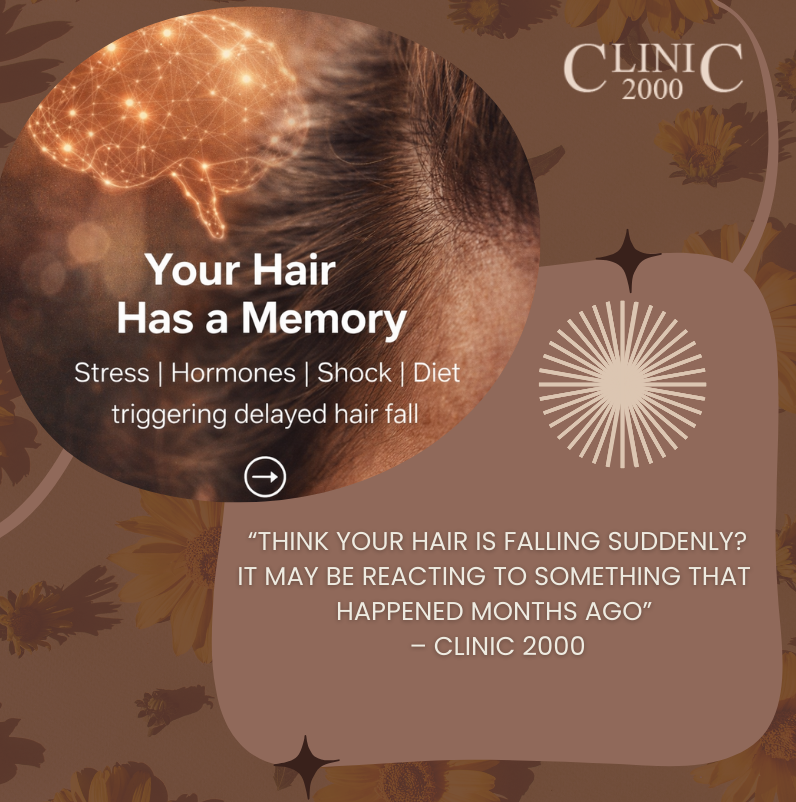
Hair loss rarely happens at the moment. It feels sudden, but biologically, it almost never is. One of the most misunderstood truths about hair health is that hair follicles respond to stress, hormonal shifts, illness, crash dieting, emotional trauma, and even lifestyle disruptions with a delay. Your hair does not react instantly to what your body is going through. It reacts weeks or even months later. And that delay is what creates confusion.
Each hair follicle follows a natural cycle: growth, transition, rest, and shedding. Under normal conditions, this cycle stays balanced. But when your body experiences a shock, whether it’s psychological stress, severe illness, nutritional deficiency, hormonal imbalance, rapid weight loss, or even major emotional change,your system prioritises survival over cosmetic functions. Hair growth is not essential for survival, so the body quietly shifts more follicles from the active growth phase into the resting phase. Nothing looks different immediately. Everything seems normal. Then, two to three months later, those resting hairs begin to shed.
That is the moment most people panic.
They wake up one morning and see more strands on the pillow. They notice hair in the shower drain. Their ponytail feels thinner. It feels like something sudden and alarming has started. But what they are actually seeing is the delayed consequence of something that happened months earlier. The original trigger has often been forgotten by the time the shedding begins. That’s why it feels mysterious.
This biological delay is sometimes referred to as telogen effluvium, but even without labels, the concept is simple: your follicles remember stress. They remember instability. They remember shock. And they react when the body feels safe enough to let those resting hairs release.
The real complication begins with fear. Once shedding is noticed, many people begin monitoring obsessively. They count strands. They examine part lines daily. They compare photos. This heightened anxiety raises cortisol levels again, and cortisol influences the hair cycle. The stress about shedding can extend the shedding phase. It becomes a feedback loop where panic fuels more panic.
Another important aspect people miss is that hair cycles are sensitive to rhythm. Sleep disruption, irregular eating patterns, extreme calorie restriction, and hormonal fluctuations can all shift follicles into rest mode. Even events like moving cities, changing jobs, or recovering from viral infections can affect the cycle months later. Hair is dynamic tissue. It constantly responds to internal signals.
However, not all shedding means permanent hair loss. Temporary cycle shifts often stabilise once the body regains balance. True progressive thinning tends to involve gradual density reduction, widening of the part line, or slow miniaturisation of strands over time. The difference lies in duration and pattern.
Understanding this delayed response changes the emotional reaction. Instead of assuming something catastrophic is happening in the present, it becomes easier to ask a different question: what changed in my body or life a few months ago? That perspective reduces panic and brings clarity.
Hair is not independent from the rest of the body. It mirrors hormonal health, stress resilience, metabolic stability, and overall recovery capacity. When something disrupts the internal system, hair often reflects it. But it also has the ability to recover when the internal environment stabilises.
The key insight is this: shedding is not betrayal. It is biology. Hair follicles are not failing randomly. They are responding to signals. And once you understand the timing of those signals, fear reduces and fear reduction itself supports recovery.
Hair does not forget. But it also does not give up easily.