


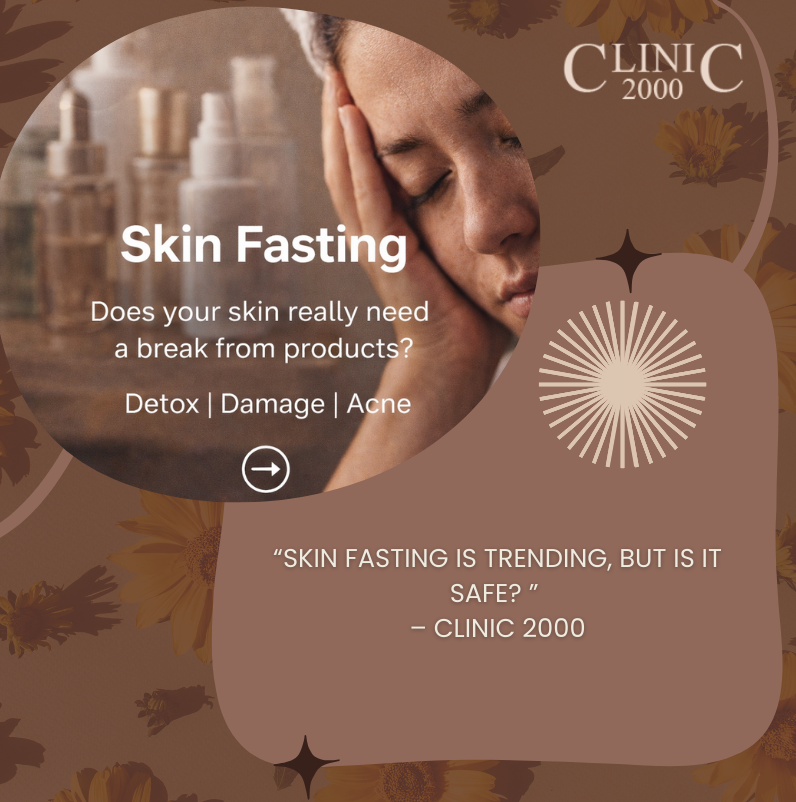
In the age of 10-step skincare routines, actives layered on actives, and viral beauty trends, a new movement has quietly gained traction: skin fasting. The idea is simple — stop using skincare products and allow your skin to “reset” naturally.
Social media promotes it as a way to repair the skin barrier, reduce breakouts, and detox from overuse of products. But is skin fasting actually beneficial? Or can it backfire, especially in individuals dealing with acne, pigmentation, or sensitive skin?
At Clinic 2000, we frequently see patients confused after experimenting with skincare trends. Some notice temporary improvement. Others experience flare-ups and increased irritation. The truth lies somewhere in between and understanding the science behind skin fasting is crucial before trying it.
What Is Skin Fasting?
Skin fasting refers to intentionally reducing or stopping skincare products for a period of time. Some people stop everything except water. Others eliminate active ingredients but continue with basic cleansing and moisturising.
The concept is based on the belief that:
- The skin can regulate itself naturally
- Overuse of products weakens the barrier
- Constant exfoliation and actives disrupt balance
- Giving the skin a break allows repair
While the theory sounds logical, the reality depends heavily on individual skin type and condition.
Why Skin Fasting Became Popular
Modern skincare culture often encourages:
- Multiple serums layered together
- Daily exfoliation
- High-strength retinoids
- Frequent product switching
This can lead to barrier damage, especially when products are used without guidance. Symptoms of an overworked skin barrier include redness, burning, tightness, breakouts, and increased sensitivity.
In such cases, simplifying the routine may indeed help. This is where the idea of skin fasting gained popularity.
When Skin Fasting Can Actually Help
For individuals who have:
- Over-exfoliated
- Used strong actives incorrectly
- Developed product-induced irritation
- Compromised their skin barrier
Reducing products temporarily can allow the barrier to recover.
The skin barrier is responsible for retaining moisture and protecting against external irritants. When damaged, it leads to inflammation and breakouts. Removing harsh products and focusing on gentle cleansing and hydration can support healing.
However, this is not the same as abandoning skincare entirely.
When Skin Fasting Can Harm Your Skin
Completely stopping skincare can be problematic for certain skin concerns.
For example:
- Acne-prone skin may worsen without proper treatment
- Pigmentation can return without sun protection
- Rosacea may flare without barrier-support products
- Aging skin may lose moisture rapidly
Skin does not “detox” in the way many online trends claim. It does not purge toxins through product withdrawal. Instead, it requires balance.
Stopping sunscreen, for instance, can undo months of pigmentation treatment. Discontinuing prescribed acne treatments abruptly can trigger rebound breakouts.
The Myth of Skin Detox
A common belief associated with skin fasting is that skin needs to detox from chemicals. Scientifically, this is inaccurate.
Detoxification happens through the liver and kidneys — not by stopping moisturiser. Skin does not accumulate toxins that require a “product cleanse.”
What it does accumulate is irritation from improper product use. And irritation is treated with correction, not neglect.
What Dermatologists Actually Recommend
Rather than full skin fasting, dermatology typically supports skin minimalism when needed.
This means:
- Using a gentle cleanser
- Applying a barrier-repair moisturiser
- Wearing sunscreen daily
- Pausing harsh actives temporarily
This approach allows healing while still protecting the skin.
At Clinic 2000, we often guide patients through structured barrier-repair phases before reintroducing active treatments gradually.
Why Acne Often Worsens During Skin Fasting
Many acne patients try stopping all products thinking their skin will “self-balance.” Instead, oil production may remain high, bacteria continue to thrive, and inflammation increases.
Acne is a medical condition influenced by hormones, oil production, and inflammation. It rarely resolves simply by avoiding skincare.
Structured treatment and consistent routines are far more effective than abrupt product withdrawal.
The Psychological Side of Skincare Trends
Trends like skin fasting often arise from frustration. When skin doesn’t improve, people assume they are “doing too much.” While this can sometimes be true, abandoning care completely can create more instability.
The real issue is not quantity of products — it is appropriateness and consistency.
So Should You Try Skin Fasting?
The answer depends on your skin condition.
If your skin is irritated and reactive due to overuse of actives, simplifying your routine may help.
If you are dealing with acne, pigmentation, hairline breakouts, or medical skin concerns, stopping treatment without guidance may delay recovery.
The key is understanding whether your skin needs rest or structured support.
Clinic 2000’s Perspective on Skin Balance
At Clinic 2000, we do not promote trend-based skincare decisions. Instead, we evaluate:
- Skin barrier health
- Oil production levels
- Pigmentation patterns
- Inflammation markers
- Lifestyle triggers
Based on this, we design treatment plans that support long-term skin resilience rather than temporary fixes.
Sometimes that means simplifying routines. Sometimes it means strengthening treatments. The decision is personalised.
Conclusion
Skin fasting is not inherently good or bad. It is a reaction to modern overuse of products. In some cases, simplifying skincare can allow the barrier to heal. In others, it can worsen existing conditions.
Skin does not need complete neglect. It needs balance.
Understanding your skin’s condition before following trends can prevent unnecessary damage. Thoughtful, science-backed care always outperforms viral solutions.
If your skin feels irritated, reactive, or unpredictable, structured evaluation and personalised guidance can make a significant difference.