


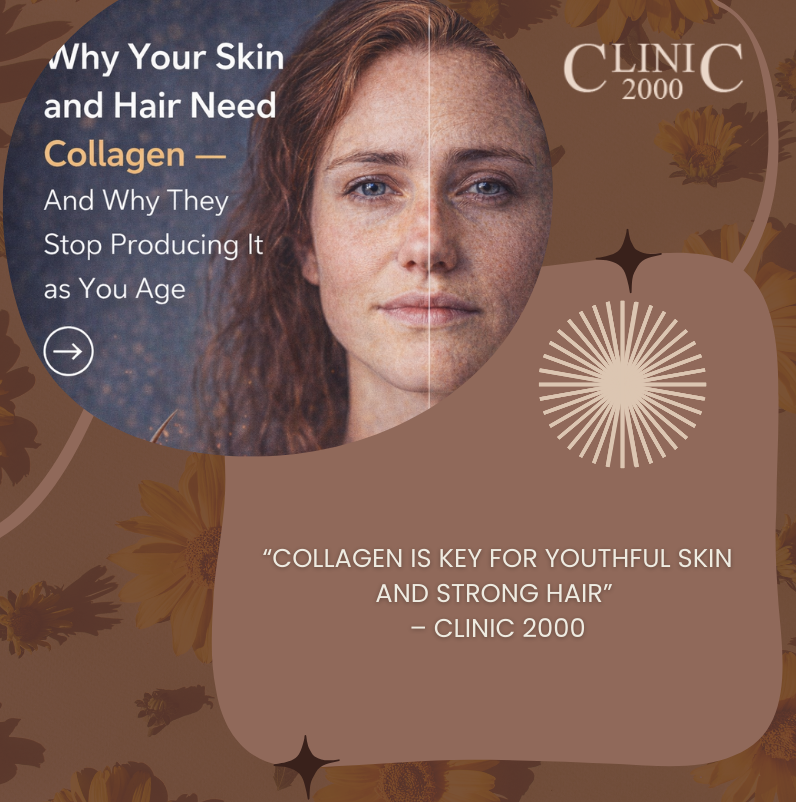
Introduction: The Secret Behind Healthy Skin and Hair
Collagen is often hailed as the “fountain of youth” for its ability to keep the skin firm, smooth, and youthful. It’s the main protein that makes up the connective tissues in your body and plays a critical role in keeping your skin elastic, plump, and glowing. But what many people don’t know is that collagen is equally important for hair health. Collagen strengthens hair follicles, promotes healthy hair growth, and can even help prevent hair loss.
As we age, our bodies naturally begin to produce less collagen, leading to visible signs of aging in the skin, such as fine lines, wrinkles, and sagging, and in the hair, such as thinning, breakage, and reduced volume. In this blog, we’ll take a deeper dive into the role of collagen in skin and hair health, why collagen production slows down with age, and how you can restore and boost collagen levels with targeted treatments.
At Clinic 2000, we believe in holistic, personalized care, and we offer a range of treatments that promote collagen production and help you maintain healthier, more youthful skin and hair. Let’s explore how collagen works, why you lose it over time, and how you can bring it back into balance.
What Collagen Does for Your Skin and Hair
For Skin: The Pillar of Youthful Skin
Collagen plays a crucial role in the structure and appearance of your skin. It forms a scaffold that provides strength, elasticity, and structure. Think of it as the “glue” that holds your skin together. Here’s how collagen keeps your skin looking fresh and youthful:
- Elasticity and Firmness: Collagen helps your skin remain taut and smooth, making it resistant to sagging and wrinkles.
- Hydration: Collagen is involved in retaining moisture in the skin, contributing to that dewy glow.
- Wound Healing: Collagen plays an essential role in skin repair. It helps wounds and cuts heal faster by supporting tissue regeneration.
Without enough collagen, your skin begins to lose its elasticity and firmness, leading to the formation of wrinkles and sagging, especially around the eyes, mouth, and jawline.
For Hair: The Foundation of Strong and Healthy Strands
Hair follicles are responsible for the growth of hair. Collagen provides structural support to these follicles, ensuring they remain strong and capable of producing healthy hair. It also plays a vital role in the scalp’s blood circulation, providing the hair follicles with the necessary nutrients and oxygen they need to grow strong hair. Here’s how collagen affects your hair:
- Promotes Hair Growth: Collagen helps maintain the hair growth cycle, ensuring the follicles stay strong and produce healthy strands.
- Strengthens Follicles: Collagen supports scalp health and prevents hair follicles from becoming weak or brittle.
- Prevents Hair Loss: Collagen can help reduce inflammation in the scalp, which is often a contributing factor to hair loss.
Why Collagen Production Slows Down with Age
As we age, collagen production naturally begins to decline. This happens due to natural aging and genetic factors, but there are also environmental and lifestyle factors that accelerate this process. By the time we reach our 30s, collagen production slows down by about 1% per year. By the time we hit our 40s and beyond, the decrease in collagen production becomes more noticeable.
Here’s why it happens:
Natural Aging Process
As we age, the skin’s ability to produce collagen naturally slows. This is part of the normal aging process. The collagen fibers in our skin become more fragile, and the production rate significantly decreases, leading to visible signs of aging such as fine lines, wrinkles, and loss of skin elasticity.
Sun Damage
Ultraviolet (UV) rays from the sun are a major factor in collagen breakdown. Sun exposure increases the production of free radicals, which damage the skin cells and accelerate collagen degradation. Over time, this causes premature aging of the skin, making it look older than it should.
Lifestyle Factors
- Smoking: Smoking restricts blood flow to the skin, reducing the skin’s ability to heal and regenerate, thereby lowering collagen production.
- Diet: A diet low in vitamin C and protein — which are essential for collagen production — can weaken the collagen in your skin. Additionally, a high-sugar diet can lead to glycation, a process that damages collagen fibers and accelerates aging.
- Stress: Chronic stress increases cortisol levels, which can break down collagen over time.
Signs of Collagen Deficiency in the Skin and Hair
As collagen levels decrease, you may notice the following signs in your skin and hair:
- Dull Skin: Collagen loss leads to reduced hydration and glow, making skin look tired and lifeless.
- Fine Lines and Wrinkles: The skin loses its firmness and elasticity, causing wrinkles to form around the eyes, mouth, and forehead.
- Sagging Skin: Collagen is responsible for keeping skin firm and plump. As its production declines, skin sags, particularly in areas like the cheeks and jawline.
- Thinning Hair: Collagen depletion can lead to weakened hair follicles, resulting in thinning hair or increased hair loss.
- Weakened Nails: Collagen also supports nail health, so its reduction can lead to brittle nails.
How to Boost Collagen Production Naturally
While we can’t stop aging, there are several ways to slow down collagen depletion and encourage the body to produce more collagen.
1. Diet and Nutrition
- Vitamin C-rich foods: Citrus fruits, berries, bell peppers, and leafy greens help support collagen production.
- Protein: Eating more lean meats, fish, and plant-based proteins provides the amino acids needed for collagen synthesis.
- Gelatin and Bone Broth: These contain collagen peptides, which are directly beneficial for skin and hair health.
2. Skincare with Collagen-Stimulating Ingredients
- Retinoids: These stimulate collagen production and speed up skin cell turnover.
- Vitamin C: Known for its role in collagen synthesis, topical Vitamin C helps brighten skin and reduce pigmentation.
- Peptides: These can stimulate collagen production in the deeper layers of the skin.
3. Sun Protection
Always wear sunscreen, even indoors, to protect your skin from UV rays. SPF 30 or higher blocks harmful rays that degrade collagen and elastin.
Medical Treatments to Stimulate Collagen
While lifestyle changes and home remedies can help support collagen production, professional treatments can provide more immediate and targeted results. At Clinic 2000, we offer several advanced, non-surgical options that stimulate collagen production and restore skin health.
PRP Therapy (Platelet-Rich Plasma)
PRP therapy uses your own blood to stimulate collagen production. The growth factors in your blood rejuvenate skin, stimulate hair follicles, and promote collagen synthesis, leading to firmer, smoother skin and stronger hair.
Microneedling
Microneedling creates tiny channels in the skin that stimulate the body’s natural healing response. This process encourages collagen production and enhances skin texture, reducing the appearance of wrinkles, scars, and fine lines.
Laser Treatments
Laser skin treatments, such as fractional CO2 lasers, target deeper layers of skin to encourage collagen renewal and tighten the skin. These treatments help reduce signs of aging and improve skin tone.
Conclusion: Collagen is Essential for Healthy Skin and Hair
Collagen plays a central role in keeping both the skin and hair healthy, strong, and youthful. As we age, the body’s ability to produce collagen naturally declines, leading to visible signs of aging such as wrinkles, sagging skin, and thinning hair. However, by understanding the factors that contribute to collagen loss — such as sun exposure, stress, poor diet, and environmental damage — we can take steps to slow down the process and restore our skin and hair’s vitality.
At Clinic 2000, we offer personalised, non-surgical treatments designed to stimulate collagen production and improve both skin and hair health. By combining advanced treatments with targeted lifestyle changes, we can help you achieve a more youthful appearance and healthier hair, all while addressing the root causes of collagen loss.
If you’re noticing signs of collagen depletion in your skin or hair, it’s time to take action. Book a consultation with Clinic 2000 to learn how we can help restore your natural beauty.
FAQs
- How can I naturally boost collagen production?
Eat collagen-boosting foods like citrus fruits, leafy greens, lean meats, and bone broth. Retinoids and vitamin C serums also help. - Can collagen supplements help?
Yes, collagen peptides can support skin, hair, and joint health when taken consistently. - How long does it take to see results from collagen treatments?
Results vary, but many people see noticeable improvements in skin elasticity and hair health after 4–6 weeks of collagen-boosting treatments. - Are non-surgical treatments for collagen effective?
Yes, treatments like PRP and microneedling have been shown to significantly improve skin texture, collagen levels, and hair growth. - Does sun exposure affect collagen?
Yes, UV rays from the sun accelerate collagen breakdown, which is why sun protection is essential for maintaining healthy skin.