


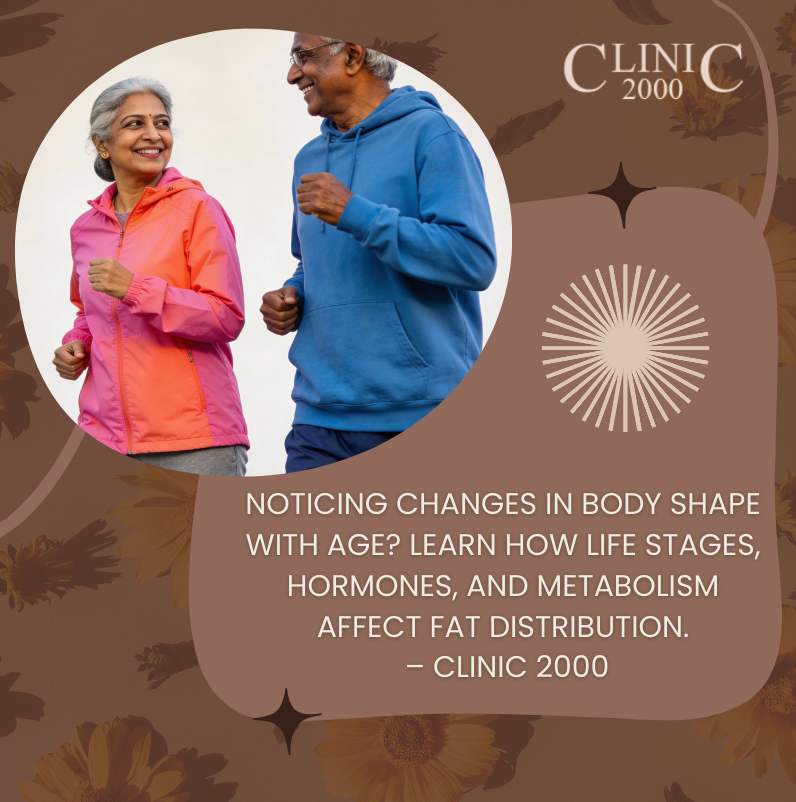
What Exactly Is Age-Related Fat Distribution?
Age-related fat distribution refers to where the body stores fat as you move through different life stages, rather than how much weight you gain or lose. Many people notice that even when their weight remains stable, their body shape changes, fat appears in new areas while disappearing from others.
This shift is not random and not due to laziness or poor discipline. It is a biological response influenced by aging, hormones, metabolism, muscle mass, and lifestyle changes. At Clinic 2000, this is one of the most common concerns we hear from patients who say, “I haven’t gained weight, but my body doesn’t look the same anymore.”
Why Does Fat Distribution Change With Age?
As the body ages, several internal systems begin to change simultaneously. These changes affect how fat is stored, retained, and released.
Key factors include:
- Hormonal shifts such as changes in estrogen, testosterone, insulin, and cortisol
- Loss of muscle mass, which slows metabolism
- Reduced metabolic efficiency, meaning fewer calories are burned at rest
- Stress and lifestyle pressures, which increase fat storage hormones
- Genetic predisposition, influencing where fat prefers to settle
Together, these factors cause fat to redistribute from areas like the hips, thighs, and limbs toward the abdomen, waist, flanks, arms, and chin.
How Fat Distribution Changes Across Life Stages
In Your 20s: Responsive and Balanced Fat Storage
During early adulthood, metabolism is efficient and muscle mass is naturally higher. Fat is evenly distributed and responds well to exercise and dietary changes. Results tend to appear quickly, and body contours remain flexible.
After 30: The First Shift
After 30, muscle mass slowly begins to decline and metabolic rate reduces. Fat starts accumulating in more selective areas such as the lower abdomen, waist, and thighs. Even with consistent routines, fat loss becomes slower and less predictable.
After 40: Hormones Take Control
In the 40s, hormonal influence becomes stronger. Women experience estrogen fluctuations, while men see gradual testosterone decline. Fat shifts toward the abdomen, and stubborn pockets become more common—even without weight gain.
Post-Pregnancy: Structural and Hormonal Changes
Pregnancy alters fat storage to support energy demands. After childbirth, areas like the lower belly and hips may remain resistant to exercise due to hormonal adaptation and muscle changes.
Perimenopause and Menopause
Reduced estrogen causes fat to shift from the lower body to the abdomen. Insulin sensitivity decreases, cortisol influence rises, and belly fat becomes more prominent and resistant.
How This Affects Appearance Over Time
Age-related fat redistribution leads to visible changes such as:
- Increased belly or waist fat without weight gain
- Loss of definition in arms and thighs
- Softer body contours
- Fat pockets that do not respond to workouts
- Clothes fitting differently despite stable weight
These changes often impact confidence more than the actual number on the scale.
The Good News: This Is Manageable
Age-related fat distribution is manageable when addressed correctly. The key is understanding that traditional weight loss methods are not always enough once fat becomes hormonally and metabolically resistant.
With the right evaluation and targeted approach, body contour and proportions can be improved safely—without surgery or extreme measures.
Treatment and Management Approaches
- Medical Evaluation of Fat Patterns
Understanding whether fat is lifestyle-driven, hormonal, or age-related helps guide the right strategy. - Metabolism and Hormonal Consideration
Addressing underlying metabolic slowdown or hormonal influence is critical for long-term results. - Non-Surgical Fat Reduction Options
Targeted approaches help address stubborn fat pockets that resist diet and exercise. - Lifestyle and Stress Support
Managing stress, sleep, and daily habits prevents further fat redistribution.
What Makes Clinic 2000’s Approach Different
At Clinic 2000, age-related fat concerns are approached medically, not cosmetically.
- Personalized assessment for each life stage
- Focus on fat distribution, not just weight
- Non-surgical, evidence-based solutions
- Ethical recommendations with realistic outcomes
- Long-term body management guidance
This ensures results that align with how the body actually changes over time.
Prevention and Maintenance Tips
- Maintain muscle mass through strength-based activity
- Prioritize sleep and stress management
- Avoid crash diets that worsen fat redistribution
- Focus on consistency rather than extremes
- Seek guidance early when changes begin
When Should You See a Specialist?
You may benefit from professional evaluation if:
- Your weight is stable but shape has changed
- Fat pockets remain despite lifestyle efforts
- Belly fat increases with age
- Post-pregnancy fat feels resistant
- Midlife body changes affect confidence
Early guidance prevents frustration and ineffective cycles.
It’s Not About Fighting Your Body
Age-related fat distribution is not a failure—it’s a biological shift. When you understand how your body changes across life stages, you stop blaming yourself and start choosing smarter solutions.
At Clinic 2000, we believe body confidence comes from working with your biology, not against it.
Frequently Asked Questions (FAQs)
- Why does my body shape change even when my weight stays the same?
As you age, muscle mass decreases and fat redistributes to different areas, especially the abdomen, even without weight gain.
- Is age-related fat gain the same for everyone?
No. Fat distribution varies based on genetics, hormones, lifestyle, stress levels, and life stages such as pregnancy or menopause.
- Why does belly fat become more common after 35 or 40?
Hormonal shifts, reduced muscle mass, and increased cortisol make the abdomen a preferred fat storage area with age.
- Can exercise alone fix age-related fat distribution?
Exercise improves overall health but cannot target stubborn, hormonally driven fat pockets on its own.
- Why does post-pregnancy fat feel harder to lose?
Pregnancy alters hormonal balance and muscle structure, making certain fat areas more resistant to lifestyle changes.
- Does menopause make fat loss impossible?
No, but it changes how the body responds. Fat loss requires more targeted and personalized strategies during this phase.
- Is it normal for fat to move from thighs to the belly with age?
Yes. This shift is common and linked to hormonal changes, especially reduced estrogen in women.
- When should I consider professional guidance for fat distribution changes?
If your body shape changes despite consistent diet and exercise, or fat becomes stubborn with age, professional evaluation can help.
Take the First Step Toward Better Skin, Hair, and Health
If poor sleep has been affecting your appearance and confidence, it’s time to take action. Book a consultation at Clinic 2000 and let our experts create a personalized plan that addresses your unique concerns.
Schedule Your Appointment Now
📞 Call: 8978537720 / 9676231891
🌐 Visit: www.clinic-2000.com
📍 Clinic 2000, Himayatnagar, Hyderabad