


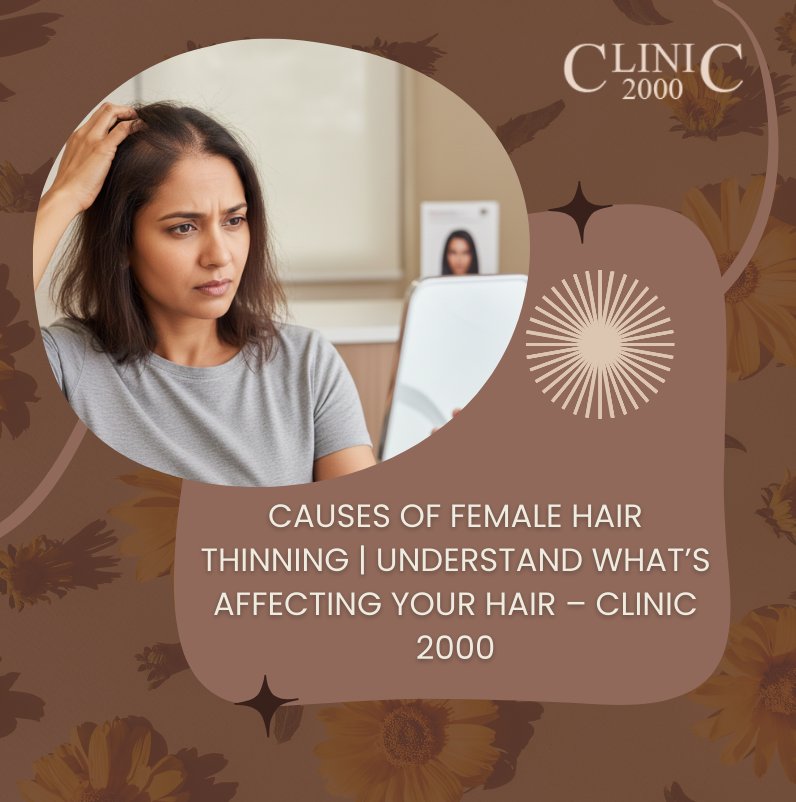
Causes of Female Hair Thinning
Understanding the Root Causes and How to Address Them
Hair thinning is a concern that affects many women at various stages of life. Unlike men, who typically experience male pattern baldness, women’s hair thinning often presents itself in a different pattern and is more likely to be temporary than permanent. However, the impact on self-esteem and confidence can be significant.
If you’re experiencing hair thinning, it’s important to understand the potential causes so that you can address them with the right treatment. At Clinic 2000, we specialize in understanding the underlying factors that lead to hair thinning and providing targeted solutions for hair restoration.
In this blog, we’ll break down the most common causes of female hair thinning, how they affect your hair, and the effective treatments available to help you regain fuller, thicker hair.
What is Hair Thinning?
Hair thinning refers to the gradual reduction of hair density, where the scalp becomes more visible due to hair loss. Unlike hair shedding, which is temporary, hair thinning can lead to long-term or permanent hair loss if not addressed properly.
For women, hair thinning may occur in patches or across the entire scalp and can be accompanied by brittle hair, dryness, and loss of shine.
Common Causes of Female Hair Thinning
1. Hormonal Imbalance
Hormones play a crucial role in regulating the hair growth cycle. When hormonal imbalances occur, they can disrupt the normal growth and shedding process, leading to hair thinning.
Some common hormonal causes of hair thinning in women include:
a. Pregnancy and Postpartum Hair Loss
During pregnancy, increased levels of estrogen promote healthy hair growth. However, after childbirth, estrogen levels drop, causing many women to experience postpartum hair loss. This condition is temporary, and most women regain their hair after several months.
b. Menopause
Menopause brings a drop in estrogen and an increase in testosterone, which can lead to female pattern baldness (also known as androgenetic alopecia). This results in thinning hair, especially around the temples and crown of the head.
c. Polycystic Ovary Syndrome (PCOS)
PCOS is a condition where androgens (male hormones) are produced in excess. This can lead to thinning hair on the scalp while increasing hair growth in other areas of the body (hirsutism). Women with PCOS often experience brittle hair or patchy thinning.
d. Birth Control Pills
Certain types of birth control pills can cause hair thinning due to the hormonal changes they trigger. Women who experience hair thinning while on the pill should consult their doctor for alternative contraceptive methods.
2. Genetics (Female Pattern Baldness)
Female pattern baldness or androgenetic alopecia is the most common cause of hair thinning in women, particularly after the age of 40. It’s hereditary, meaning that if your mother or grandmother had hair thinning or bald spots, you may be genetically predisposed to it.
How It Works:
Female pattern baldness usually causes diffuse thinning all over the scalp, particularly on the top of the head and at the crown. Unlike men, who typically experience receding hairlines or bald spots, women tend to have more generalized thinning.
This type of hair thinning occurs when the hair follicles shrink due to the effects of androgens (male hormones), leading to shorter, finer hair over time.
3. Nutritional Deficiencies
A poor diet lacking essential vitamins and minerals can cause hair thinning in women. Key nutrients that support healthy hair include:
- Iron
• Vitamin D
• Zinc
• B-vitamins (including Biotin)
• Omega-3 fatty acids
How Nutritional Deficiencies Affect Hair
Hair needs these nutrients for growth, strength, and repair. A lack of iron can cause anemia, which often leads to hair thinning. Vitamin D deficiency is associated with hair shedding, while low levels of zinc and B-vitamins can lead to brittle hair and slow growth.
Women who follow restrictive diets or experience eating disorders may have inadequate nutrition, which can significantly affect their hair health.
4. Stress and Anxiety
Stress is one of the most overlooked causes of hair thinning in women. Chronic stress can trigger a type of hair loss called telogen effluvium, in which large amounts of hair enter the resting (telogen) phase of the hair growth cycle prematurely, resulting in noticeable shedding.
Stress can also cause hormonal imbalances, which exacerbate hair thinning, especially in women who are already prone to conditions like PCOS or menopause.
How Stress Affects Hair
When under stress, the body produces cortisol, which can disrupt the hair growth cycle. If stress is ongoing, it can lead to a prolonged shedding phase, resulting in thinning hair. Emotional stress, work-related stress, or traumatic events can all contribute to this condition.
5. Thyroid Disorders
The thyroid gland regulates many functions in the body, including metabolism and hair growth. Both hypothyroidism (underactive thyroid) and hyperthyroidism (overactive thyroid) can cause hair thinning in women.
How Thyroid Disorders Cause Hair Thinning
- Hypothyroidism: When the thyroid doesn’t produce enough hormones, hair follicles may not receive the necessary nutrients for growth, leading to dry, brittle hair and thinning.
• Hyperthyroidism: On the flip side, too much thyroid hormone can increase hair shedding and lead to overall thinning.
6. Medications and Medical Treatments
Certain medications and medical treatments can cause hair thinning as a side effect. These include:
- Chemotherapy: Commonly associated with hair loss due to the destruction of hair follicles during treatment.
• Antidepressants: Some medications for depression and anxiety may contribute to hair shedding.
• Blood thinners: Certain types of medications can interfere with the hair growth cycle.
It’s important to consult with your doctor if you suspect your medication is contributing to hair thinning.
7. Environmental Factors
Environmental stressors, such as pollution, extreme temperatures, and harsh chemicals, can also affect hair health. These factors can cause oxidative stress, which weakens hair follicles and contributes to thinning.
How to Treat Female Hair Thinning
1. Medical Treatments
If you’re experiencing hair thinning, the first step is to identify the cause. Treatment options may include:
• Minoxidil (Rogaine)
• Finasteride (for female pattern baldness)
• Hair transplant surgery for advanced thinning
2. Nutritional Supplements
If a nutritional deficiency is identified, consider adding supplements such as biotin, vitamin D, and iron to your diet. These can help improve hair strength and reduce thinning.
3. Hair Care Routine
Use gentle shampoos, conditioners, and hair masks to keep the hair strong. Avoid harsh chemicals, hot styling tools, or tight hairstyles that can pull on the hair.
4. Stress Management
Reducing stress through yoga, meditation, exercise, or therapy can help restore balance and reduce hair loss due to stress.
5. Laser Treatments
For more severe cases of thinning hair, low-level laser therapy (LLLT) devices can stimulate hair follicles and promote hair regrowth.
Hair thinning in women is a common problem with multiple causes, ranging from hormonal imbalances to stress and nutritional deficiencies. Understanding the root cause of your hair thinning is the first step toward effective treatment.
At Clinic 2000, we offer a range of personalized treatments to address hair thinning in women, from medical treatments to hair restoration techniques. If you’re experiencing hair thinning or hair loss, schedule a consultation today to explore the best treatment options for you.
Frequently Asked Questions (FAQs)
1. What causes sudden hair thinning in women?
Sudden hair thinning can be caused by stress, hormonal changes (such as pregnancy or menopause), thyroid issues, or a recent illness.
2. How can I stop hair thinning?
Identifying the cause is key. Medical treatments, stress management, proper nutrition, and hair care are all important steps to prevent further thinning.
3. Can hair thinning be reversed?
In many cases, hair thinning can be slowed or reversed with the right treatment plan. Early intervention is key to regaining hair thickness.
4. Is hair thinning a sign of something serious?
Hair thinning can sometimes be linked to underlying medical conditions like thyroid disorders, anemia, or hormonal imbalances. A thorough evaluation is recommended.
Worried about hair thinning?
Book a consultation at Clinic 2000 today and let our hair restoration experts guide you toward healthier, thicker hair!
Schedule Your Appointment Now
Call : 8978537720 / 9676231891