


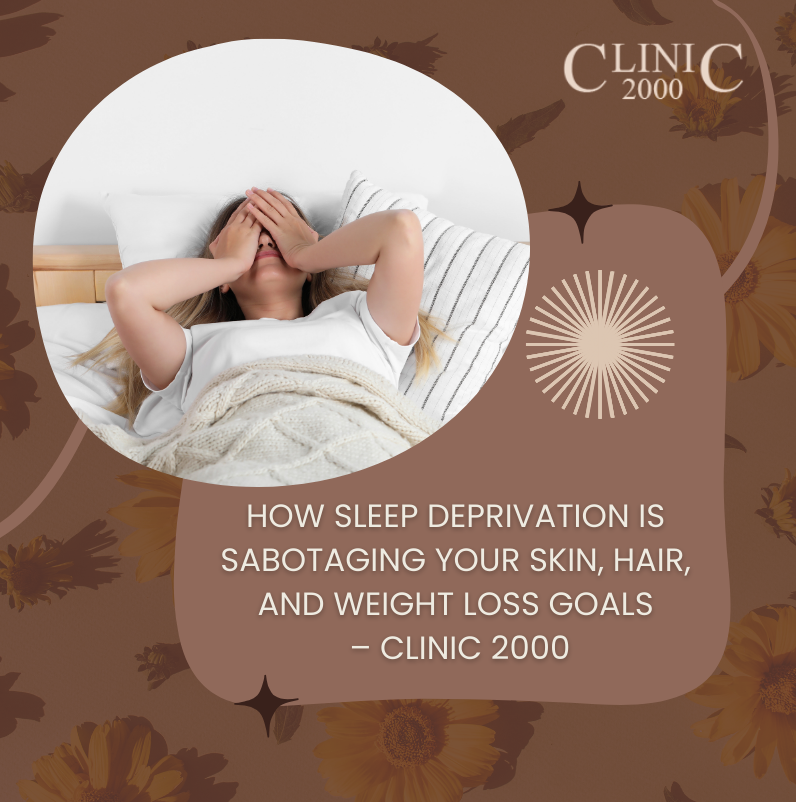
Introduction: The Hidden Cost of Sleepless Nights
You moisturize religiously, follow a strict diet, and never miss your hair care routine. Yet your skin looks dull, your hair keeps thinning, and the weighing scale refuses to budge. The culprit might not be your skincare products or diet plan-it could be the six hours (or less) you’re sleeping every night.
Sleep is not just rest. It’s when your body repairs skin cells, balances hormones, and regulates metabolism. When you consistently sacrifice sleep for work deadlines, social media scrolling, or late-night binge-watching, you’re unknowingly sabotaging your skin, hair, and weight loss goals.
At Clinic 2000, Hyderabad, we see countless patients struggling with stubborn acne, unexplained hair fall, and resistant belly fat. Often, when we dig deeper into their lifestyle, sleep deprivation emerges as a common, overlooked factor.
This blog explains exactly how lack of sleep affects your appearance and health, and what you can do to reverse the damage.
What Happens to Your Body When You Don’t Sleep Enough
Sleep is when your body enters repair mode. During deep sleep stages, your body:
- Produces growth hormones that repair skin and tissues
- Regulates hunger hormones like ghrelin and leptin
- Balances cortisol (the stress hormone)
- Strengthens hair follicles
- Supports immune function
When you consistently sleep less than 7–9 hours per night, these processes get disrupted, leading to visible and internal damage.
How Sleep Deprivation Destroys Your Skin
- Accelerates Premature Aging
During deep sleep, your body produces human growth hormone (HGH), which is essential for collagen production. Collagen keeps your skin firm, smooth, and youthful.
What happens with poor sleep:
- Reduced collagen production leads to fine lines and wrinkles
- Skin loses elasticity, causing sagging
- Dark circles and under-eye bags become permanent
Studies show that people who sleep less than 6 hours per night show signs of premature aging faster than those who get adequate rest.
- Triggers Acne and Breakouts
Sleep deprivation increases cortisol levels. High cortisol triggers:
- Excess oil production in the skin
- Inflammation that worsens existing acne
- Slower healing of acne marks and scars
If you notice that your acne flares up during stressful, sleepless weeks, this is why. At Clinic 2000, many patients with hormonal acne treatment needs also report chronic sleep issues.
- Causes Dull, Dehydrated Skin
While you sleep, your skin’s hydration rebalances. Blood flow increases, and your skin rebuilds its moisture barrier.
Without enough sleep:
- Skin pH becomes imbalanced
- Moisture loss increases, leading to dryness
- Complexion looks tired, grey, and lifeless
Even the most expensive serums can’t fix dehydration caused by chronic sleep deprivation.
- Worsens Pigmentation and Dark Spots
Poor sleep increases oxidative stress and inflammation, both of which worsen pigmentation. If you’re undergoing pigmentation treatment in Hyderabad at Clinic 2000, inadequate sleep can slow down your results and cause pigmentation to return faster.
- Slows Down Skin Healing
Whether it’s acne scars, post-laser recovery, or chemical peel aftercare, your skin needs sleep to heal properly. Sleep deprivation delays cell turnover, meaning:
- Acne marks take longer to fade
- Post-treatment recovery is slower
- Skin becomes more sensitive to irritation
How Poor Sleep Causes Hair Fall and Thinning
- Disrupts the Hair Growth Cycle
Hair grows in cycles: growth (anagen), transition (catagen), and rest (telogen). Sleep is essential for the anagen phase, where hair actively grows.
What happens without sleep:
- Hair prematurely enters the resting phase
- More hair sheds than usual
- New hair growth slows down
This condition is called telogen effluvium, and it’s one of the most common causes of sudden hair fall that patients report at Clinic 2000.
- Increases Stress Hormones That Attack Hair Follicles
Lack of sleep raises cortisol levels. Elevated cortisol:
- Weakens hair follicles
- Triggers hair thinning, especially around the crown and temples
- Worsens conditions like androgenetic alopecia (pattern baldness)
Women with PCOS-related hair fall and men experiencing male pattern baldness often see faster progression when sleep is poor.
- Reduces Blood Circulation to the Scalp
During sleep, blood flow to the scalp increases, delivering oxygen and nutrients to hair follicles.
Sleep deprivation reduces this circulation, leading to:
- Weak, brittle hair
- Slower hair growth
- Increased hair breakage
- Affects Nutrient Absorption
Even if you’re taking biotin, iron, or vitamin D supplements for hair health, poor sleep reduces how effectively your body absorbs and uses these nutrients.
If you’re undergoing PRP hair treatment in Hyderabad at Clinic 2000, getting quality sleep will significantly improve your treatment outcomes.
How Lack of Sleep Makes Weight Loss Nearly Impossible
- Increases Hunger and Cravings
Sleep regulates two key hunger hormones:
- Ghrelin (the hunger hormone) – increases when you’re sleep-deprived
- Leptin (the satiety hormone) – decreases with poor sleep
The result:
- You feel hungrier throughout the day
- You crave high-calorie, sugary, and fatty foods
- Portion control becomes difficult
This is why you reach for chips, sweets, or fried snacks after a sleepless night—it’s hormonal, not a lack of willpower.
- Slows Down Metabolism
Sleep deprivation reduces your resting metabolic rate, meaning your body burns fewer calories even when you’re doing nothing.
How it works:
- Poor sleep disrupts thyroid function
- Insulin sensitivity decreases, making fat storage easier
- Your body holds onto fat, especially around the belly
If you’re struggling with slow metabolism, weight loss or hormonal belly fat, improving your sleep could be the breakthrough you need.
- Increases Cortisol and Belly Fat Storage
Chronic sleep deprivation keeps cortisol levels high. High cortisol:
- Promotes fat storage in the abdominal area
- Breaks down muscle tissue (which further slows metabolism)
- Increases insulin resistance
This is why stress and cortisol-related belly fat is so stubborn—it’s directly linked to poor sleep patterns.
- Reduces Exercise Performance and Recovery
When you’re sleep-deprived:
- You have less energy for workouts
- Your muscles recover slower
- You’re more prone to injury
Even if you manage to exercise, your body won’t burn fat efficiently or build muscle properly without adequate rest.
At Clinic 2000’s non-surgical weight loss programs in Hyderabad, we emphasize sleep hygiene as a core component of sustainable fat loss.
The Science Behind Sleep and Hormonal Balance
Sleep and hormones are deeply interconnected. Here’s how poor sleep disrupts key hormones that affect your skin, hair, and weight:
Hormone | Role | What Happens with Poor Sleep |
Cortisol | Stress regulation | Stays elevated, causing inflammation, acne, hair fall, and belly fat |
Insulin | Blood sugar control | Becomes less effective, leading to weight gain and pigmentation |
Ghrelin | Hunger signal | Increases, making you eat more |
Leptin | Fullness signal | Decreases, so you don’t feel satisfied |
Growth Hormone | Tissue repair | Drops, slowing skin and hair regeneration |
Melatonin | Sleep-wake cycle | Gets disrupted, affecting overall recovery |
Balancing these hormones requires consistent, quality sleep- something you cannot replace with supplements or treatments alone.
How Much Sleep Do You Really Need?
General recommendations:
- Adults (18–64 years): 7–9 hours per night
- Older adults (65+): 7–8 hours per night
- Teenagers: 8–10 hours per night
Quality matters as much as quantity. Interrupted sleep, even if you’re in bed for 8 hours, won’t give your body the deep restorative stages it needs.
Signs You’re Not Getting Enough Quality Sleep
- Waking up feeling tired, even after 7–8 hours in bed
- Frequent breakouts or worsening acne
- Hair shedding more than usual
- Difficulty losing weight despite diet and exercise
- Dark circles, puffy eyes, and dull skin
- Increased cravings for sugar and junk food
- Mood swings, irritability, or brain fog
If you relate to three or more of these signs, it’s time to prioritize sleep.
Practical Tips to Improve Sleep for Better Skin, Hair, and Weight Loss:
Set a Consistent Sleep Schedule: Go to bed and wake up at the same time every day, including weekends. This stabilizes your circadian rhythm, which directly impacts hormone balance, skin repair, and metabolism.
Create a Relaxing Bedtime Routine: Step away from screens at least one hour before bed. Read, listen to calming music, meditate, or dim the lights to tell your brain it’s time to slow down.
Optimize Your Sleep Environment: Keep your bedroom cool, ideally between 18–20°C. Block out light with blackout curtains, reduce noise using white noise or earplugs, and make sure your mattress and pillow truly support your body.
Limit Caffeine and Heavy Meals Before Bed: Avoid caffeine after 2 PM and finish dinner at least two to three hours before sleeping. If hunger strikes, choose something light like a banana or warm milk.
Manage Stress During the Day: Incorporate yoga, deep breathing, or mindfulness into your routine. Exercise regularly but not close to bedtime, and journal your thoughts to mentally unload before sleep.
Consider Natural Sleep Aids: Magnesium supplements may help, but only after consulting a doctor. Herbal teas such as chamomile or lavender and gentle aromatherapy can support relaxation naturally.
Seek Professional Help if Needed: Chronic insomnia, sleep apnea, or ongoing sleep disruption should not be ignored. Quality sleep isn’t a luxury- it’s a medical necessity that affects your skin, hair, and weight long term.
How Clinic 2000 Supports Your Skin, Hair, and Weight Goals Holistically
At Clinic 2000, Hyderabad, we don’t just treat symptoms- we address root causes. Our approach includes:
For Skin:
- Acne treatment programs that consider hormonal and lifestyle factors
- Pigmentation treatments like Super Peel and C2K Peel
- Anti-aging therapies including skin tightening and rejuvenation
For Hair:
- PRP hair treatment to stimulate natural regrowth
- Hair fall management tailored to hormonal and nutritional causes
- Scalp health assessments for sustainable results
For Weight Loss:
- Non-surgical weight loss programs addressing hormones, metabolism, and lifestyle
- Hormonal belly fat reduction without surgery
- Medical weight loss counseling with personalized plans
During consultations, we evaluate your sleep patterns, stress levels, diet, and medical history to create a comprehensive treatment plan that works with your body, not against it.
Frequently Asked Questions (FAQs)
- Can improving sleep really help with acne?
Yes. Better sleep reduces cortisol, balances oil production, and promotes faster skin healing, all of which reduce acne.
- How long does it take to see improvements in skin and hair after fixing sleep?
Most people notice changes within 2–4 weeks of consistent quality sleep, though full results may take 2–3 months.
- Will sleep alone help me lose weight?
Sleep is crucial, but it works best when combined with a balanced diet, regular exercise, and stress management.
- Can sleep deprivation cause permanent hair loss?
In most cases, hair loss from sleep deprivation is reversible. However, chronic sleep issues combined with genetic factors may worsen long-term hair thinning.
- What if I can’t sleep due to work or lifestyle?
Consider working with a sleep specialist or counselor. Even small improvements- like adding 30–60 minutes of sleep- can make a difference.
- Does napping help if I didn’t sleep well at night?
Short naps (20–30 minutes) can help with alertness, but they don’t replace deep, restorative nighttime sleep.
Conclusion: Sleep Is Not Negotiable for Beauty and Health
Your skin, hair, and body are constantly sending signals. Dull skin, thinning hair, and stubborn weight are not just aesthetic concerns- they’re your body’s way of asking for rest.
No cream, serum, supplement, or treatment can fully compensate for chronic sleep deprivation. Sleep is when your body heals, regenerates, and rebalances. It’s the most powerful (and free) beauty and wellness tool you have.
At Clinic 2000, Hyderabad, we combine advanced medical treatments with lifestyle guidance to help you achieve lasting results. Whether you’re dealing with acne, hair fall, pigmentation, or weight issues, we’re here to support your journey- starting with something as simple, yet profound, as a good night’s sleep.
Take the First Step Toward Better Skin, Hair, and Health
If poor sleep has been affecting your appearance and confidence, it’s time to take action. Book a consultation at Clinic 2000 and let our experts create a personalized plan that addresses your unique concerns.
Schedule Your Appointment Now
📞 Call: 8978537720 / 9676231891
🌐 Visit: www.clinic-2000.com
📍 Clinic 2000, Himayatnagar, Hyderabad
Your transformation begins tonight- with the sleep your body has been craving.