


Introduction
You slept well. You’re hydrated. You don’t feel exhausted.
But your skin tells a different story.
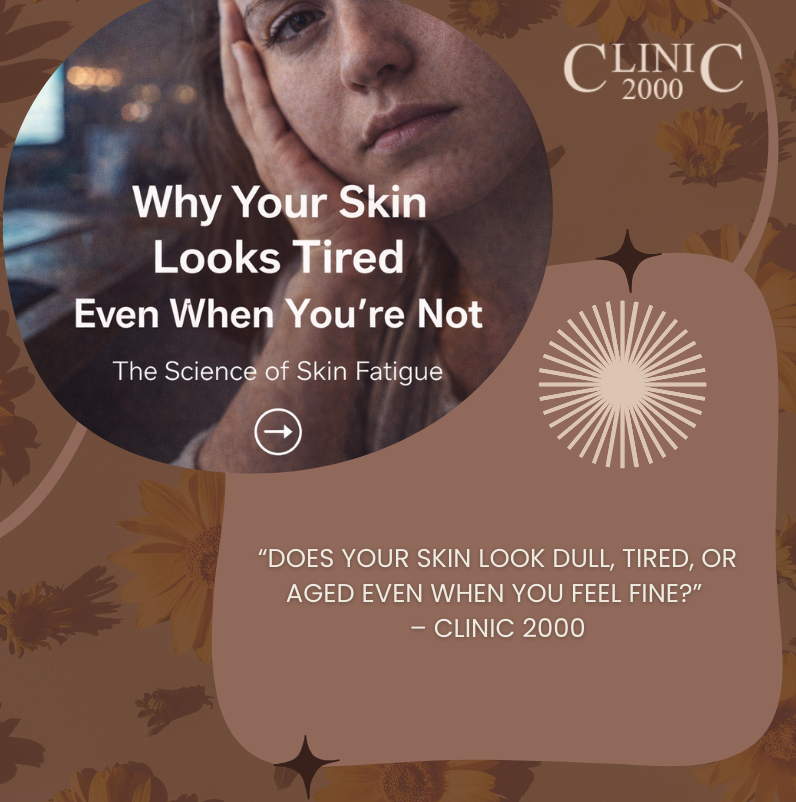
It looks dull. Slightly saggy. Uneven. Maybe darker around the eyes. Makeup doesn’t sit the way it used to. There’s a loss of glow that feels difficult to explain.
This is what dermatology increasingly refers to as skin fatigue — a condition where the skin loses its natural vitality even when the body feels relatively fine.
Skin fatigue is not a medical diagnosis, but it reflects a combination of biological stress, barrier disruption, collagen slowdown, inflammation, and environmental exposure. At Clinic 2000, we see this concern frequently in working professionals and urban individuals who say, “I don’t feel tired, but my skin looks tired.”
Understanding why this happens is the first step toward correcting it.
What Is Skin Fatigue
Skin fatigue refers to visible signs of exhaustion in the skin without obvious illness or major skin disease.
It usually presents as:
- Dullness
- Uneven tone
- Fine lines appearing more prominent
- Dark circles
- Mild sagging
- Loss of bounce and elasticity
The skin may not have acne or pigmentation as the main issue. Instead, it lacks brightness and vitality.
This happens when the skin’s repair and regeneration processes slow down or become overwhelmed.
Why Skin Regeneration Slows Down
Your skin constantly renews itself. In healthy young skin, cells regenerate roughly every 28 days. As we age — and as lifestyle stress accumulates — this cycle slows.
Slower cell turnover means:
- Dead cells remain on the surface longer
- Skin appears rough and dull
- Light reflection decreases
- Texture becomes uneven
Urban lifestyle accelerates this slowdown. Pollution, stress, irregular sleep, and blue light exposure increase oxidative stress, which damages collagen and elastin fibers.
Over time, the skin loses its natural resilience.
The Role of Oxidative Stress
One of the biggest drivers of skin fatigue is oxidative stress.
Oxidative stress occurs when free radicals damage skin cells faster than the body can repair them. These free radicals are generated by:
- Pollution
- UV exposure
- Blue light from screens
- Chronic stress
- Poor diet
This damage weakens collagen and affects the skin barrier. The result is skin that looks prematurely aged, even without deep wrinkles.
Barrier Dysfunction and Dehydration
Many people assume dull skin is dry skin. But skin fatigue is often linked to barrier dysfunction, not just surface dryness.
When the skin barrier weakens:
- Moisture escapes more easily
- Inflammation increases
- Skin becomes reactive
- Glow reduces
Even oily skin can look tired if the barrier is compromised. Overuse of exfoliants, harsh cleansers, and strong active ingredients can worsen this condition.
Why Dark Circles and Eye Fatigue Increase
The under-eye area is particularly sensitive. It has thinner skin and fewer oil glands. When collagen reduces and circulation slows, dark circles and puffiness become more noticeable.
Screen exposure also contributes by straining eye muscles and reducing blink frequency, which affects circulation in the area.
Even if you feel rested, this area may reveal subtle fatigue first.
Stress and Cortisol’s Impact on Skin
Chronic stress elevates cortisol levels. Cortisol reduces collagen production and increases inflammation.
High cortisol over time can cause:
- Slower skin healing
- Increased fine lines
- Dull complexion
- Reduced elasticity
This is why professionals with high mental stress often experience skin that looks older than their actual age.
When Skin Fatigue Is a Hormonal Signal
In some cases, persistent dullness and sagging may reflect hormonal shifts, especially in individuals in their 30s and 40s.
Reduced estrogen levels affect collagen production. Thyroid imbalance can also make skin appear dry, pale, and tired.
If lifestyle correction does not improve skin vitality, deeper evaluation may be necessary.
Can Skin Fatigue Be Reversed
Yes — but not with random product changes.
Reversing skin fatigue requires:
- Strengthening the skin barrier
- Supporting collagen production
- Improving circulation
- Managing oxidative stress
- Ensuring hormonal balance if needed
At Clinic 2000, we focus on structured, personalised approaches rather than trend-based solutions. Depending on the evaluation, treatment may include rejuvenation therapies, barrier repair protocols, pigmentation management, or lifestyle correction guidance.
The key is consistency and targeted intervention.
Conclusion
Skin fatigue is not imaginary. It is a visible reflection of internal and environmental stress accumulating over time.
When your skin looks tired despite feeling fine, it is often signaling that repair mechanisms are overwhelmed. Pollution, digital exposure, stress, and slowed regeneration all contribute.
Ignoring it allows the process to progress into deeper aging changes. Addressing it early helps restore glow, elasticity, and resilience.
Healthy skin is not just about products — it is about maintaining balance between protection, repair, and regeneration.
If your skin has lost its vitality and you’re unsure why, structured evaluation and personalised guidance can help identify the underlying triggers and restore long-term skin health.