


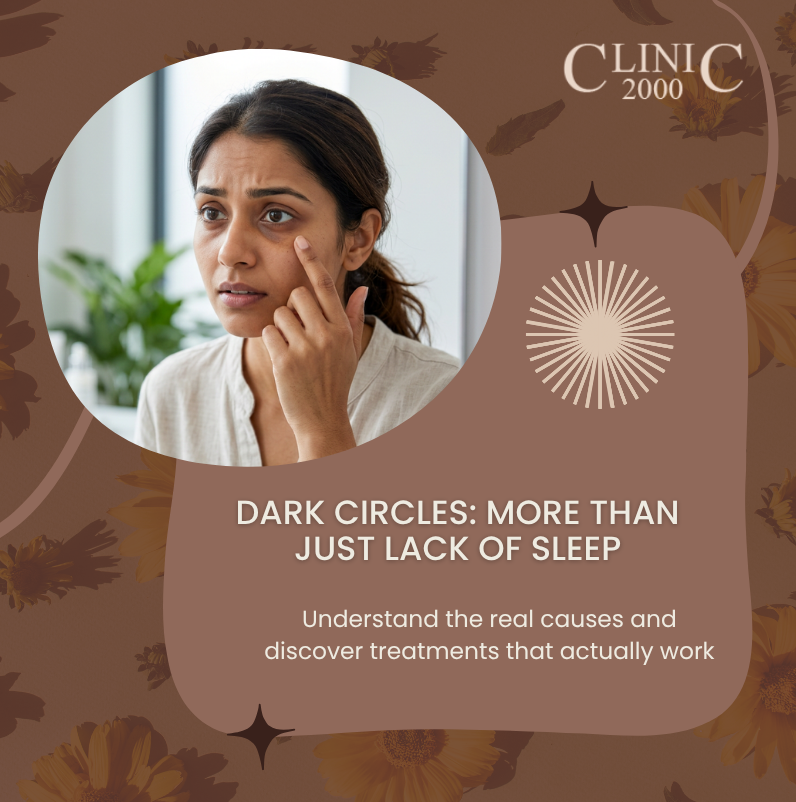
Dark circles are one of the most common cosmetic complaints that dermatologists hear and also one of the most misunderstood. Most people assume dark circles are simply the result of poor sleep. The reality is far more nuanced. Dark circles have multiple distinct causes, and a treatment that works for one type will do nothing for another.
If you have tried every eye cream on the market, slept eight hours a night, and still wake up looking tired and aged, it is likely because the root cause of your dark circles has never been properly identified. In this blog, we break down the different types of dark circles, explain what is actually causing yours, and walk through the clinical treatments that genuinely work.
Why the Under-Eye Area Is Uniquely Vulnerable
The skin under the eye is thinner than anywhere else on the face, roughly 0.5 mm compared to 2 mm on the cheek. This means that blood vessels, pigment deposits, and structural changes beneath the skin surface are far more visible here than anywhere else. It also means that this skin is more susceptible to damage from UV exposure, rubbing, dehydration, and ageing.
The 4 Main Types of Dark Circles
1. Pigmented Dark Circles
This is the most common type among South Asian and Indian skin tones. Excess melanin production in the periorbital (around the eye) area creates true skin darkening not shadowing. The skin itself is darker in colour. This type is often genetic and tends to be present even in childhood.
Triggers include sun exposure, frequent eye rubbing (which triggers post-inflammatory pigmentation), atopic dermatitis, and certain medications. Pigmented dark circles have a brown or grey-brown hue and are typically flat on the skin surface.
2. Vascular Dark Circles
These are caused by the visibility of blood vessels and bluish-purple discolouration beneath the thin under-eye skin. The area appears bluish or purple rather than brown. Common causes include:
• Nasal congestion – which causes blood to pool in the veins beneath the eye
• Anaemia or iron deficiency – poor oxygenation makes blood appear darker
• Fatigue and poor sleep – which dilate blood vessels and increase their visibility
• Genetics – naturally thin under-eye skin in some individuals
3. Structural / Shadowing Dark Circles
These are not caused by pigment or blood vessels at all, they are shadows. The natural contour of the under-eye area creates a hollow (called the tear trough) that casts a shadow on the skin, creating the appearance of darkness. This type typically worsens with age as the fat pads beneath the eyes diminish.
If you look in the mirror with a light held directly below your face and the dark circles disappear, they are likely structural rather than pigmentary.
4. Mixed Dark Circles
In reality, most adults have a combination of types, some pigmentation layered over some hollowing, with a vascular component on top. This is why a single cream or treatment rarely resolves dark circles; completely effective treatment usually addresses multiple contributing factors.
Why Eye Creams Almost Never Solve the Problem
Over-the-counter eye creams can provide temporary improvement, primarily through moisturisation, mild brightening agents, and caffeine-induced vasoconstriction. However, they cannot penetrate deeply enough to address dermal pigmentation, they cannot restore lost fat volume, and they cannot meaningfully reduce vascular visibility. They are maintenance tools, not solutions.
Clinical Treatments That Actually Work
Chemical Peels for Pigmented Dark Circles
For brown or grey-brown pigmented dark circles, a carefully calibrated chemical peel can reduce melanin content in the periorbital skin. At Clinic 2000, we use peels formulated specifically for the delicate under-eye area and for Indian skin tones. A course of peels progressively lightens the skin, improving evenness and reducing the contrast between the under-eye area and the rest of the face.
Laser Treatment for Pigmentation
The E+ Laser at Clinic 2000 can be used to target excess melanin in the under-eye area with precision. Laser treatment is particularly effective for pigmented dark circles that have not responded to topical treatments. Results are visible within a few sessions, with the skin becoming progressively lighter and more even.
HydraFacial for Skin Quality and Hydration
Dehydrated, dull under-eye skin makes dark circles look worse. The HydraFacial delivers deep hydration, antioxidants, and nourishment to the periorbital area, significantly improving skin quality, radiance, and the overall appearance of the under-eye zone.
Addressing the Root Cause
For vascular dark circles driven by anaemia or thyroid issues, the most important intervention is treating the underlying medical condition. Our team can evaluate relevant health markers and coordinate appropriate management alongside cosmetic treatment.
Preventive Measures You Can Start Today
• Always apply SPF under and around the eye, UV exposure is a primary driver of pigmented dark circles
• Avoid rubbing your eyes, this triggers melanin production through inflammation
• Use a gentle, fragrance-free eye cream with niacinamide or vitamin C
• Sleep on your back with your head slightly elevated to reduce fluid pooling
• Stay well hydrated and maintain iron-sufficient nutrition
• Manage allergies and nasal congestion, which worsen vascular dark circles
Conclusion
Dark circles are not a single problem, they are a collection of related but distinct conditions that require targeted treatment. The most effective approach begins with correctly identifying the type of dark circles you have, then applying the right combination of clinical treatments.
At Clinic 2000, our dermatologist will conduct a thorough assessment of your under-eye area before recommending any treatment. We have successfully treated dark circles across all skin types and all levels of severity and we use only FDA and CE approved technologies throughout.
Stop wasting money on eye creams that do not work. Book a consultation at Clinic 2000 today and get a treatment plan that is built around your specific type of dark circles.
Frequently Asked Questions
Q: Are dark circles genetic? Yes, pigmented dark circles in particular have a strong genetic component, especially in South Asian populations. However, even genetic dark circles can be significantly improved with the right clinical treatments.
Q: How many sessions do I need to treat dark circles? It depends on the type and severity. Most patients see meaningful improvement within 3 to 6 chemical peel sessions or 3 to 4 laser sessions. A combination approach often delivers the fastest results.
Q: Can dark circles come back after treatment? They can if sun protection is neglected or the underlying cause is not addressed. Our team provides a full aftercare plan to maintain and protect your results.
Q: Is laser treatment around the eyes safe? Yes, when performed by a trained clinician with the right equipment. At Clinic 2000, we use FDA and CE approved laser technology with appropriate eye protection protocols.
Q: Do dark circles indicate a health problem? Sometimes. Anaemia, thyroid dysfunction, kidney issues, and chronic allergies can all contribute to dark circles. Our team will evaluate relevant health factors as part of your consultation.