


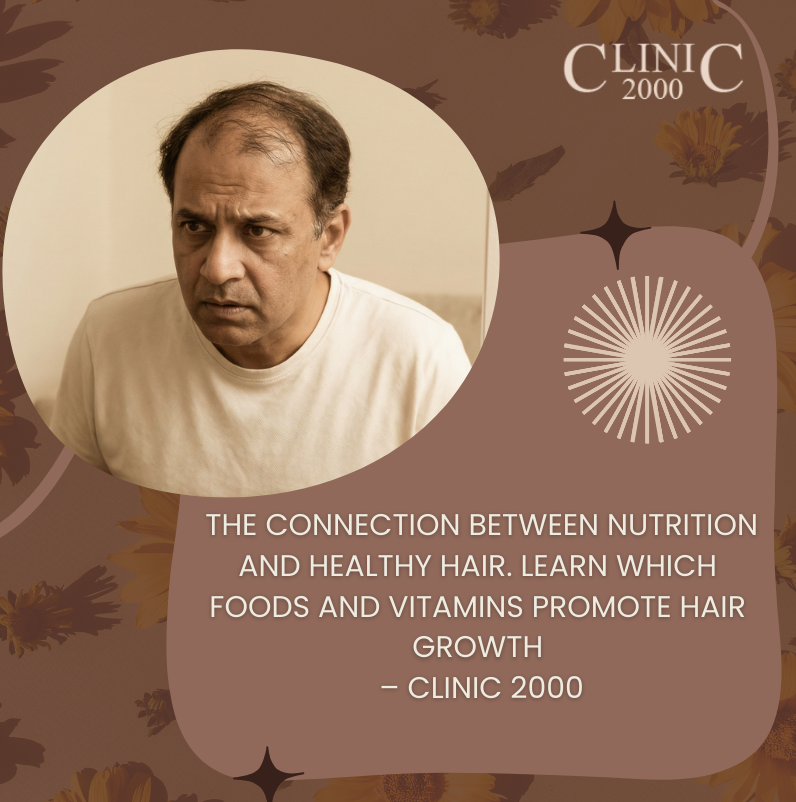
Introduction: The Connection Between Diet and Healthy Hair
For many people, healthy, thick, and shiny hair is a sign of good overall health. However, achieving and maintaining strong hair isn’t solely about using the right products or hair treatments. One of the most crucial, yet often overlooked, factors in maintaining healthy hair is nutrition. What you put into your body has a direct impact on your hair’s strength, growth, and appearance.
In this blog, we’ll explore how nutrition plays a vital role in hair health, which nutrients are essential for healthy hair growth, and how Clinic 2000 provides personalized hair care solutions that address dietary imbalances and promote long-term hair health.
The Science Behind Nutrition and Hair Growth
Your hair is made up of keratin, a protein produced by hair follicles under your scalp. The hair growth cycle includes three key phases:
- Anagen (growth phase)
- Catagen (transitional phase)
- Telogen (resting phase)
In order for hair to grow thick and strong, the hair follicles need to receive a steady supply of essential nutrients to function at their best. These nutrients support the hair follicle’s ability to produce strong, healthy strands and maintain proper blood circulation to the scalp, which is necessary for hair growth.
The right nutrition helps fuel these processes. A deficient diet can lead to weak hair, hair thinning, and hair loss, making it harder for your body to produce and maintain healthy hair.
Key Nutrients for Healthy Hair
Hair health is directly influenced by several key nutrients that are essential for hair growth and maintenance. Let’s explore some of the most important nutrients that contribute to healthy, thicker hair:
1. Protein: The Building Block of Hair
The foundation of healthy hair is protein. Since hair is primarily made of keratin, a type of protein, it’s essential that you provide your body with adequate protein to support healthy hair growth. Hair loss can often be a direct result of protein deficiencies.
Sources of protein include:
- Lean meats (chicken, turkey, beef)
- Fish (salmon, tuna, sardines)
- Eggs
- Beans and legumes
- Dairy products (milk, yogurt, cheese)
- Nuts and seeds (almonds, chia seeds, pumpkin seeds)
A balanced diet that includes sufficient amounts of protein helps promote strong hair and supports healthy hair follicles.
2. Iron: Essential for Oxygenating the Scalp
Iron is a vital mineral that plays a critical role in carrying oxygen to your body’s cells, including the hair follicles. Iron deficiency (anemia) is one of the most common causes of hair thinning and hair loss. Iron helps stimulate circulation to the scalp, ensuring the hair follicles are nourished and capable of growing healthy strands.
Sources of iron:
- Spinach and leafy greens
- Red meat
- Lentils
- Tofu and beans
- Pumpkin seeds
Including iron-rich foods in your diet ensures that your hair follicles get enough oxygen to produce thick, strong hair.
3. Vitamin D: The Sunshine Vitamin for Hair Follicles
Vitamin D plays a critical role in regulating the growth and health of hair follicles. A Vitamin D deficiency has been linked to hair loss conditions such as alopecia (a condition that causes hair loss in small patches). It also helps in the development of new hair follicles, promoting hair growth and preventing hair thinning.
Sources of Vitamin D:
- Sun exposure (spend at least 10–15 minutes in sunlight every day)
- Fatty fish (salmon, mackerel, sardines)
- Fortified dairy products and plant-based milk
- Egg yolks
- Mushrooms
Ensuring an adequate intake of Vitamin D helps maintain healthy hair growth and can reduce the risk of hair thinning caused by deficiencies.
4. Biotin: The Vitamin That Supports Hair Health
Biotin, also known as Vitamin B7, is part of the Vitamin B complex, which supports the metabolism of proteins and fats in the body. Biotin helps strengthen hair and prevents it from becoming brittle or prone to breakage.
Biotin also increases hair thickness and promotes growth by improving keratin production.
Sources of Biotin:
- Eggs
- Nuts and seeds
- Sweet potatoes
- Salmon
- Avocados
Biotin supplements are often recommended for those suffering from hair thinning, as they can improve hair texture and stimulate healthy growth.
5. Omega-3 Fatty Acids: Nourishing and Moisturizing Your Hair
Omega-3 fatty acids are essential fats that help nourish and moisturize the scalp. They also contribute to improving the elasticity of hair and reducing dryness and brittleness. These fats help regulate the oil production on your scalp, keeping it hydrated and preventing scalp irritation that can lead to hair loss.
Sources of Omega-3s:
- Fatty fish (salmon, mackerel, sardines)
- Chia seeds
- Flaxseeds
- Walnuts
- Hemp seeds
Including Omega-3s in your diet can help ensure that your scalp remains healthy, which is essential for optimal hair growth.
6. Zinc: Supporting Hair Regrowth and Repair
Zinc is a powerful mineral that plays a critical role in cell growth and division, making it essential for hair regeneration. It also helps repair damaged hair follicles, reduces hair loss, and supports scalp health. A deficiency in zinc can lead to hair thinning, hair loss, and weakened hair strands.
Sources of Zinc:
- Pumpkin seeds
- Cashews
- Lentils
- Chickpeas
- Oysters and red meat
Including zinc-rich foods in your diet can improve scalp health, encourage healthy hair growth, and prevent brittle hair
The Impact of Poor Diet on Hair Health
When your body lacks the essential nutrients it needs for healthy hair, the consequences are often visible. A poor diet can lead to:
- Brittle hair: Hair becomes fragile and breaks easily.
- Hair thinning: Lack of proper nutrition can lead to gradual hair thinning or even hair loss.
- Slower hair growth: Without the right nutrients, the hair growth cycle slows down.
- Dry, dull hair: Hair lacks moisture and shine, appearing lifeless.
The key to healthy hair is a balanced diet rich in vitamins, minerals, and healthy fats. By making better food choices, you can prevent damage to your hair and promote long-term growth.
How Clinic 2000 Helps You Achieve Healthy Hair Through Diet and Treatment
At Clinic 2000, we understand that achieving and maintaining healthy hair requires more than just topical treatments. That’s why we offer a holistic approach to hair health that includes nutritional guidance, medical treatments, and personalized care to help you achieve optimal hair health.
1. Personalized Hair Treatments
We provide non-surgical treatments like PRP therapy, microneedling, and laser hair restoration, all of which help stimulate hair growth and improve scalp health. These treatments complement nutritional therapy to ensure healthy, thick hair.
2. Nutritional Counseling for Hair Health
Our experts will guide you through a customized dietary plan designed to support hair health from the inside out. We focus on nutrient-rich foods that promote hair regrowth and strengthening.
3. Lifestyle Support
In addition to nutrition and treatments, we offer guidance on stress management, sleep hygiene, and exercise, as these factors can also affect your hair health.
Conclusion: Nourish Your Hair for Long-Term Health
The secret to healthy hair lies in the right nutrition and personalized care. At Clinic 2000, we understand that strong, thick hair requires more than just the right products, it requires a balanced diet, hormonal support, and a holistic approach. Our team is here to help you achieve long-lasting hair health by providing customized treatments and expert nutritional guidance.
FAQs About Nutrition and Hair Health
- Can poor diet cause hair loss?
Answer: Yes, deficiencies in key nutrients like protein, iron, zinc, and biotin can lead to hair thinning and hair loss.
- How long does it take to see results from improving diet for hair health?
Answer: Results can be seen in 2–3 months of consistent dietary changes, though some improvements may be visible sooner.
- Can I take supplements to improve my hair health?
Answer: While supplements like biotin and vitamin D can help, it’s best to focus on a well-balanced diet rich in vitamins and minerals.
- How much protein should I consume for healthy hair?
Answer: Aim for 0.8 to 1.0 grams of protein per kilogram of body weight per day to support healthy hair growth.
- Does stress affect hair health?
Answer: Yes, stress can lead to hormonal imbalances that increase hair shedding and slow down the hair growth cycle.
If you’re struggling with hair loss or brittle hair, it’s time to look at your diet and hair care routine. Book a consultation with the experts at Clinic 2000 today. We will create a personalized treatment plan tailored to your unique needs and help you achieve healthy, beautiful hair.
📞 Call: 8978537720 / 9676231891
🌐 Visit: www.clinic-2000.com
📍 Location: Clinic 2000, Himayatnagar, Hyderabad