


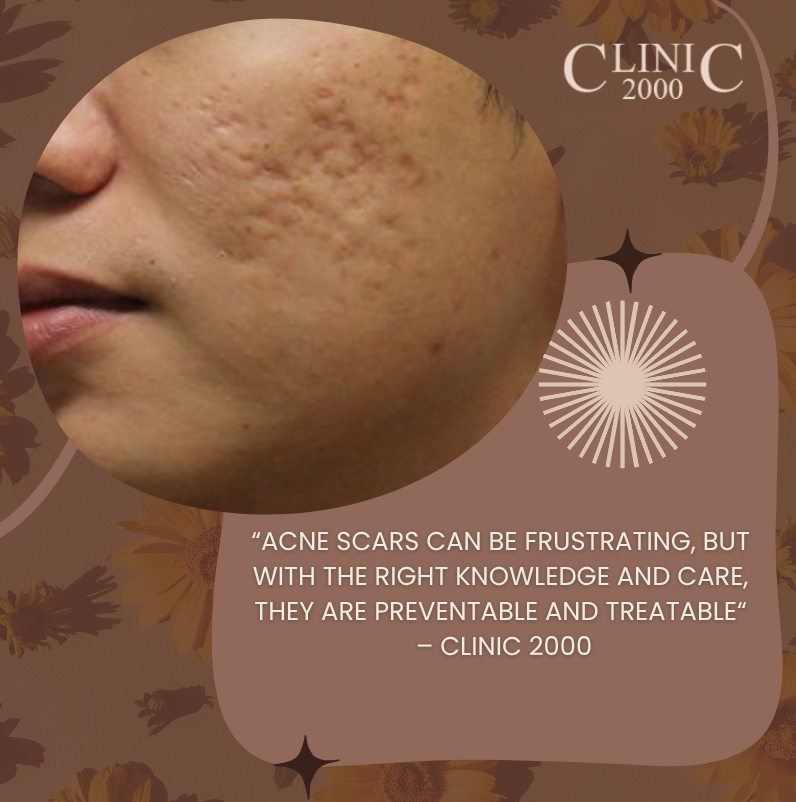
Introduction: The Frustrating Reality of Acne Scarring
If you’ve ever struggled with acne, you know that the journey doesn’t end when the breakouts finally stop. The real challenge often lies in the aftermath, acne scars.
For many people, these scars feel like a permanent reminder of a painful time. What’s even more frustrating is the fact that despite having clear skin again, the scars often remain visible. But here’s the thing: Acne scarring is not inevitable, and with the right treatments, it can be minimized or even eliminated.
At Clinic 2000, we see countless patients who feel their acne scars are holding them back. Whether it’s dark spots, indentations, or textured skin, there is hope. In this blog, we’ll explain why acne scars happen, how you can prevent them, and the effective treatments available to restore your skin’s natural smoothness and clarity.
What Is Acne Scarring?
Acne scars are the visible marks left on the skin after an acne lesion has healed. While acne itself is caused by clogged pores, oil production, and bacteria, scarring occurs when there is damage to the skin tissue during the healing process. This damage often leads to either hyperpigmentation (dark spots) or textural changes (indentations, pits, or raised scars).
The severity of scarring can vary depending on several factors, including the type of acne, how the skin heals, and whether you pick or pop your pimples (a huge cause of deep scarring!).
Why Does Acne Scarring Happen?
Acne scarring happens for several reasons, and not everyone who has acne will develop scars. Here are the main factors that contribute to acne scarring:
1. Inflammation
Inflammation is one of the primary causes of acne scarring. When the body is fighting the infection in an acne lesion, it sends inflammatory cells to the site, which can cause damage to the surrounding tissue. The more inflamed the acne, the more likely it is to scar.
2. Deep Acne Lesions
There are different types of acne lesions, and the deeper the acne is, the more likely it is to leave a scar. Cystic acne, which involves large, painful, deep pimples, is especially notorious for causing scars due to the significant damage it inflicts on the skin tissue.
3. Delayed Healing
When acne isn’t treated quickly or correctly, it can take longer to heal. During this prolonged healing process, the skin’s natural collagen production may not keep up, leading to textural scars (like pitting or indentations) or uneven skin tone.
4. Picking and Squeezing Acne
One of the worst habits when dealing with acne is picking or squeezing pimples. Doing this can push bacteria deeper into the skin, causing more damage and increasing the risk of scarring. The more you pick, the more likely you are to develop scars.
Types of Acne Scars
Acne scars can appear in several different forms, each requiring a different approach to treatment:
1. Hyperpigmentation (Dark Spots)
These are the flat, dark spots that can appear after an acne lesion heals. They are not true scars but are the result of excess melanin production in the skin. Hyperpigmentation often fades with time, but it can take months for these spots to disappear.
2. Atrophic Scars (Indented Scars)
These are depressed scars that occur when the skin loses collagen during the healing process. The skin appears to be “sunken” in certain areas. Atrophic scars are common in cases of cystic acne and can be further divided into:
- Ice Pick Scars: Deep, narrow pits.
- Boxcar Scars: Broad, shallow depressions with sharp edges.
- Rolling Scars: Wavy, uneven skin surface caused by a lack of collagen.
3. Hypertrophic Scars (Raised Scars)
Hypertrophic scars are raised scars that occur when excess collagen is produced during the healing process. They appear as thick, raised areas of skin and are more common with severe acne lesions.
How to Prevent Acne Scarring
While you can’t entirely eliminate the risk of scarring, there are steps you can take to minimize the chances of it happening:
1. Don’t Pick or Squeeze Pimples
It may be tempting, but picking or popping pimples only worsens inflammation and increases the chances of scarring. Instead, use acne treatments to dry out and heal the pimple. If needed, see a dermatologist for professional extractions.
2. Use the Right Acne Treatment Early
The sooner you treat acne, the less time the lesions have to damage the skin. Over-the-counter treatments containing benzoyl peroxide, salicylic acid, or retinoids can help prevent acne from becoming severe. For persistent cases, professional acne treatments at Clinic 2000, such as chemical peels or laser therapy, can help target deep acne lesions before they lead to scarring.
3. Protect Your Skin from the Sun
Sun exposure can darken hyperpigmentation and make scars worse. Always apply a high-SPF sunscreen daily, even if you’re not spending much time outdoors. Sunscreen prevents UV damage and helps to fade dark spots faster.
4. Be Patient and Consistent
Treating acne scars requires time and consistency. While products like Vitamin C serums, exfoliating acids, and brightening creams can help with hyperpigmentation, results take time, often months. Consistency is key to seeing gradual improvements.
How Clinic 2000 Can Help with Acne Scars
At Clinic 2000, we offer a variety of personalized treatments designed to address both acne and acne scarring. Here’s how we can help:
1. Chemical Peels
Chemical peels remove dead skin cells and promote cell turnover, helping to reduce hyperpigmentation and improve skin texture. The C2K Peel and Super Peel at Clinic 2000 are specifically designed to treat acne scars and uneven skin tone.
2. Microneedling
Microneedling stimulates collagen production and helps smooth out atrophic scars. This procedure can reduce the appearance of ice pick, boxcar, and rolling scars, making your skin look more even and rejuvenated.
3. PRP (Platelet-Rich Plasma) Therapy
PRP uses your body’s own platelet-rich plasma to promote skin healing and collagen production. It’s a highly effective treatment for both skin rejuvenation and scarring.
4. Laser Treatments
Laser treatments, such as fractional CO2 lasers, are excellent for resurfacing the skin and treating deep scarring. Laser therapy stimulates collagen regeneration and can significantly improve the appearance of textural scars.
Conclusion
Acne scarring is a common concern for anyone who has had acne, but the good news is that it’s treatable. With early intervention, proper skincare, and professional treatments, it’s possible to minimize and even erase acne scars. At Clinic 2000, we offer personalized solutions that target both the root causes of acne and the scars it leaves behind.
If you’re tired of dealing with acne scars and want to learn how our treatments can help, book a consultation with us today. Our dermatology specialists will design a customized treatment plan to restore your skin’s natural beauty.
FAQs
- How long does it take for acne scars to fade?
It depends on the severity of the scar, but hyperpigmentation can take 2–3 months to fade, while atrophic scars may take longer and may require professional treatment. - Can I treat acne scars at home?
While you can use products like Vitamin C, retinoids, and exfoliating acids, professional treatments like microneedling and chemical peels are more effective for deep scars. - Are there any home remedies for acne scars?
Natural remedies like aloe vera and honey can help soothe the skin, but they are not as effective as professional treatments for reducing scars. - Can acne scars be permanently removed?
While it may be challenging to remove deep scars completely, advanced treatments like microneedling and laser therapy can significantly improve their appearance. - When should I consult a dermatologist for acne scars?
If your scars are persistent and not improving with over-the-counter treatments, it’s time to consult a dermatologist for a personalized treatment plan.
If you’re ready to treat your acne scars effectively, book a consultation with Clinic 2000 today. Our specialists will guide you through the best treatment options for clear, smooth, and radiant skin.