


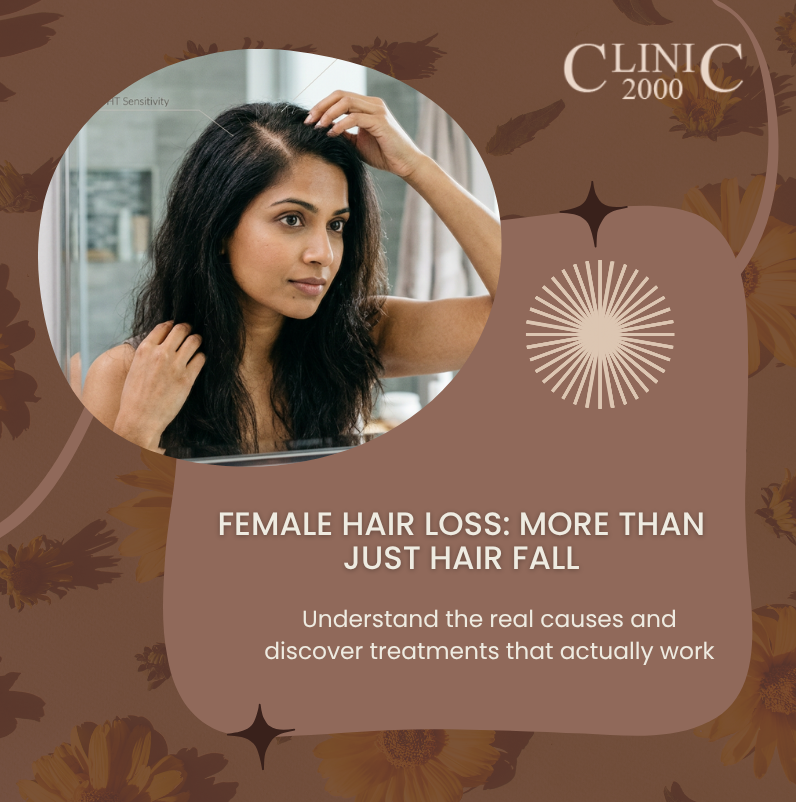
Hair loss is often thought of as a male problem, something that happens to men as they age. But female hair loss is remarkably common, significantly under-discussed, and emotionally devastating in a way that can be even more pronounced than for men. Hair is deeply tied to identity and self-image for women, and losing it can affect confidence, mental health, and quality of life profoundly.
What makes female hair loss more complex is that it rarely follows the same pattern as male hair loss and its causes are far more varied. Hormonal shifts, nutritional deficiencies, thyroid dysfunction, stress, scalp conditions, and autoimmune factors all play a role. Without identifying the right cause, treatment is guesswork.
In this blog, we explain how female hair loss differs from male pattern baldness, the most common causes, how to tell which type you have, and what actually works to stop and reverse it.
How Female Hair Loss Differs From Male Hair Loss
Male pattern hair loss (androgenetic alopecia) follows a predictable path, a receding hairline, followed by thinning at the crown, eventually merging into significant baldness. The cause is primarily genetic sensitivity to DHT (dihydrotestosterone), a hormone that shrinks hair follicles over time.
Female hair loss is different in almost every way:
• It typically appears as diffuse thinning across the scalp, a widening parting, reduced density, or overall loss of volume rather than distinct bald patches
• The hairline at the front usually remains intact (unlike men)
• The causes are far more varied, hormonal, nutritional, inflammatory, and autoimmune factors all play a role
• It can occur at any age from the late teens through to menopause and beyond
• It is more likely to be reversible with the right treatment
Common Causes of Hair Loss in Women
1. Androgenetic Alopecia (Female Pattern Hair Loss)
Just like men, women can experience genetically driven hair thinning but the pattern is different. Women typically develop thinning across the crown and top of the scalp while retaining the frontal hairline. This is the most common type of progressive hair loss in women over 40, though it can appear earlier.
2. Telogen Effluvium
This is the most common cause of sudden or excessive hair shedding in women. Telogen effluvium occurs when a significant physical or emotional stress pushes a large proportion of hair follicles from their active growth phase into the resting (telogen) phase simultaneously. Two to three months later, these hairs shed all at once.
Common triggers include childbirth, major surgery, significant illness (including COVID-19), extreme weight loss, crash dieting, severe emotional stress, or starting/stopping hormonal contraceptives.
3. Hormonal Changes
Women’s hormonal profiles are dynamic across their lifetime, pregnancy, postpartum recovery, perimenopause, and menopause all cause significant hormonal shifts that affect the hair cycle. PCOS is also a major hormonal driver of hair loss in women of reproductive age (see our dedicated PCOS blog for more detail).
4. Iron Deficiency and Anaemia
Iron is essential for the production of red blood cells, which carry oxygen to hair follicles. Iron deficiency, extremely common among Indian women due to dietary patterns and menstrual blood loss is one of the leading and most frequently missed causes of hair loss. Even iron levels that fall within the ‘normal’ laboratory range may be inadequate for optimal hair growth.
5. Thyroid Dysfunction
Both an underactive thyroid (hypothyroidism) and an overactive thyroid (hyperthyroidism) can cause hair loss. Thyroid hormones regulate the growth, differentiation, and function of hair follicles. Hair loss from thyroid dysfunction is typically diffuse and affects the entire scalp.
6. Nutritional Deficiencies
In addition to iron, deficiencies in zinc, biotin, vitamin D, and protein are commonly linked to hair loss. Restrictive diets particularly very low-calorie or very low-protein diets frequently cause or worsen hair shedding.
7. Alopecia Areata
Alopecia areata is an autoimmune condition where the immune system attacks hair follicles, causing sudden, patchy hair loss. It can affect the scalp, eyebrows, lashes, and body hair. It requires specific medical management distinct from other hair loss types.
How Is Female Hair Loss Diagnosed?
Accurate diagnosis is the most critical step. At Clinic 2000, our trichologist conducts a thorough scalp analysis to assess the pattern and density of hair loss, examines hair shaft quality and root health, and recommends blood tests to screen for iron, thyroid, hormonal imbalances, and nutritional deficiencies.
Without this workup, treatment is incomplete. For example, treating hair loss with PRP while an undiagnosed iron deficiency remains unaddressed will produce minimal results.
What Actually Helps: Treatment Options
Treating Underlying Causes
The most important and often the most effective intervention is correcting any underlying deficiencies or hormonal imbalances. Iron supplementation, thyroid management, addressing PCOS, and improving nutritional status all produce significant hair regrowth once deficiencies are corrected.
PRP (Platelet-Rich Plasma) Therapy
PRP is one of the most effective treatments for androgenetic alopecia and diffuse hair thinning in women. Growth factors from the patient’s own blood are injected into the scalp to stimulate weakened follicles and extend the active growth phase. For many women, PRP produces meaningful density improvement within 3 to 6 months. (See our full PRP vs. GFC blog for a detailed comparison.)
GFC (Growth Factor Concentrate) Therapy
GFC delivers a higher concentration of isolated growth factors than standard PRP. It is a strong choice for women with moderate to advanced thinning or those who have had limited success with PRP in the past.
Scalp Health Treatments
A compromised scalp environment, dandruff, seborrheic dermatitis, or inflammation worsens hair loss. Scalp treatments, medicated shampoos, and targeted nutrition protocols support a healthier follicular environment for regrowth.
Nutritional Protocol
Our registered dietitian creates nutrition plans that correct deficiencies, support follicle health, and complement clinical treatments. Adequate protein, iron, zinc, and specific vitamins are all part of a comprehensive hair recovery programme.
Conclusion
Female hair loss is complex, emotionally difficult, and almost always treatable but only when the right cause is correctly identified. Guessing at the cause or reaching for the nearest hair supplement without a proper assessment is unlikely to produce lasting results.
At Clinic 2000, we combine trichological expertise, clinical diagnostics, and advanced treatments like PRP and GFC to address female hair loss comprehensively. Whether your hair loss is sudden or gradual, patchy or diffuse, we have the tools and experience to help.
Book a consultation today and let us find and fix the real reason your hair is falling.
Frequently Asked Questions
Q: Is it normal to lose 100 hairs per day? Yes, losing 50 to 100 hairs daily is within the normal range. If you are losing significantly more, or noticing visible thinning, that warrants a professional evaluation.
Q: Can hair loss from telogen effluvium be reversed? Yes. Once the trigger is resolved and nutritional status is optimised, most telogen effluvium cases resolve within 6 to 12 months. Clinical treatments like PRP can accelerate recovery.
Q: Will my hair grow back after pregnancy-related hair loss? Postpartum hair loss typically resolves on its own within 6 to 12 months as hormones stabilise. Clinical support can speed the process if loss is severe.
Q: How many PRP sessions do I need for female hair loss? Typically 4 to 6 sessions for the initial course, with maintenance sessions every 3 to 6 months for sustained results.
Q: Can stress really cause hair loss? Yes. Significant emotional or physical stress is a well-documented trigger for telogen effluvium. Managing stress, combined with nutritional support and clinical treatment, is part of an effective recovery plan.