


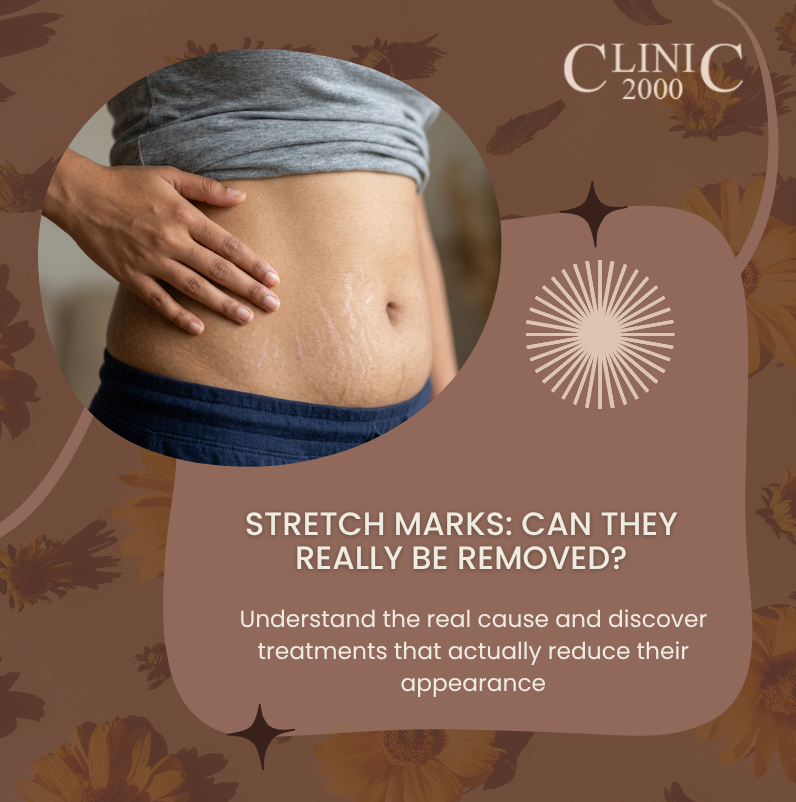
Stretch marks. They appear on bellies after pregnancy, on the thighs after a growth spurt, on the arms or back after rapid muscle gain, or anywhere the body has gained or lost weight quickly. They are one of the most common skin concerns in the world and yet, they remain frustratingly difficult to treat.
The market is full of creams, oils, and butters that promise to remove stretch marks. Most of them deliver minimal results. This is because stretch marks are not a surface skin issue, they are a structural injury to the dermis. And treating them effectively requires reaching that deeper layer.
In this blog, we explain what stretch marks actually are, why some people get them more than others, why they are so resistant to topical treatments, and which clinical procedures genuinely reduce their appearance.
What Are Stretch Marks?
Stretch marks medically known as striae occur when the skin is stretched faster than it can produce new collagen and elastin. The dermis (the middle layer of skin, responsible for structure and elasticity) develops microscopic tears in its collagen fibres. As these tears heal, scar tissue forms and it is this scar tissue, running in lines across the skin, that we see as stretch marks.
Stretch marks typically appear first as pink, red, purple, or dark brown streaks (striae rubra), this is the active inflammatory phase. Over time, they fade to a silvery or white colour (striae alba), the mature, scar phase. Treating stretch marks while they are still red is significantly easier than treating mature white ones, because the tissue is still somewhat active.
Why Do Some People Get Stretch Marks More Than Others?
Genetics
Genetic predisposition is the strongest single predictor. If your parents or siblings have stretch marks, you are more likely to develop them. Genetics influences your baseline skin elasticity and collagen density both of which determine how your skin handles being stretched.
Rate of Change
The faster the skin is stretched, the less time it has to produce new collagen to accommodate the change. Rapid weight gain, rapid muscle growth (common in young athletes), or the rapid expansion of pregnancy all outpace the skin’s repair capacity.
Hormonal Factors
Elevated levels of cortisol, the stress hormone, which also rises during pregnancy, suppress collagen production, making the dermis more vulnerable to tearing. This is why stretch marks are so common in pregnancy: both mechanical stretching and hormonal changes work against the skin at the same time.
Skin Hydration and Nutrition
Dehydrated skin and nutritionally depleted skin (low protein, zinc, or vitamin C intake) have reduced collagen synthesis capacity and are more susceptible to stretching injuries.
The Truth About Stretch Mark Creams
Creams and oils cannot penetrate the dermis, the layer where stretch marks actually exist. They can improve skin surface hydration and texture, which may make stretch marks appear slightly less prominent. But they cannot repair collagen tears, stimulate new collagen growth at the dermal level, or meaningfully reduce the depth or width of established stretch marks.
This does not mean moisturising is useless, well-hydrated skin is more elastic and may reduce the formation of new stretch marks. But for marks that are already present, topical products alone are insufficient.
Clinical Treatments That Actually Work
1. Microneedling (Collagen Induction Therapy)
Microneedling is one of the most effective treatments for both new and mature stretch marks. Fine needles create controlled micro-channels through the skin surface into the dermis, triggering the body’s wound-healing response. New collagen and elastin are produced at the treatment site, progressively filling and smoothing the stretch mark from within.
At Clinic 2000, microneedling is performed using precision devices that allow controlled needle depth, ensuring the treatment reaches exactly the right dermal layer for stretch mark repair. A course of 4 to 6 sessions produces significant improvement in texture, colour, and visibility.
2. Laser Treatment
Laser therapy is particularly effective for red or purple stretch marks (striae rubra). The E+ Laser at Clinic 2000 can target the pigmentation and vascular component of new stretch marks, reducing their redness and encouraging remodelling of the collagen fibres beneath. For white or silver mature stretch marks, a combination of laser and microneedling typically delivers the best outcome.
3. Chemical Peels
Chemical peels stimulate cell renewal and superficial collagen production. While they are less effective as a standalone treatment for deep stretch marks, they complement other procedures by improving overall skin texture and tone in the surrounding area. Our Super Peel and C2K Peel options can be incorporated into a comprehensive stretch mark management plan.
4. HydraFacial for Body
HydraFacial body treatments hydrate and nourish the skin in stretch mark-prone areas, improving its resilience and providing a healthier surface environment in which other treatments can work more effectively.
What Results Can You Realistically Expect?
It is important to be honest: stretch marks cannot be made invisible. They are scars and like all scars, they can be significantly improved but not fully erased. With a proper clinical treatment course, most patients see a 50 to 70 percent improvement in the texture, colour, and visibility of their stretch marks particularly when treatment begins during the red phase.
White or silver mature stretch marks require more sessions and a combination approach, but still show meaningful improvement in texture and become far less noticeable on the skin’s surface.
Tips to Prevent New Stretch Marks
• Keep skin well moisturised, especially in pregnancy or during periods of significant weight change
• Maintain adequate hydration, well-hydrated skin is more elastic
• Eat a protein-rich diet with sufficient zinc and vitamin C to support collagen production
• Aim for gradual rather than rapid weight gain or loss where possible
• Begin preventive treatment early as soon as you notice the first signs of stretch marks forming
Conclusion
Stretch marks are common, natural, and not a sign of any health problem but if they are affecting your confidence, there are genuinely effective clinical treatments available. The key is addressing them with the right technology and setting realistic expectations.
At Clinic 2000, our dermatologist will assess your stretch marks, identify the most appropriate treatment approach, and provide a clear picture of what results you can expect. We use FDA and CE approved equipment throughout and have extensive experience treating stretch marks across all skin types.
Book a consultation today and take the first step toward skin you feel comfortable in.
Frequently Asked Questions
Q: What is the best age to treat stretch marks? Stretch marks are best treated early during the red or purple phase when the tissue is still active. However, even mature white stretch marks can be significantly improved with microneedling and laser combination treatment.
Q: Can men get stretch marks treated too? Absolutely. Stretch marks from rapid muscle gain or weight change are common in men and respond well to the same treatments.
Q: How many sessions of microneedling are needed? Most patients require 4 to 6 sessions for significant improvement, spaced 4 to 6 weeks apart.
Q: Is stretch mark treatment safe during breastfeeding? Most clinical treatments are deferred until after breastfeeding for safety. Our team will advise appropriate timing based on your individual circumstances.
Q: Does stretch mark treatment hurt? Microneedling and laser treatments involve mild discomfort. A numbing cream is applied before sessions to ensure comfort throughout.